Sunday Post: Hadrian’s Wall Planning Update and the Wall's History Into the Modern Era
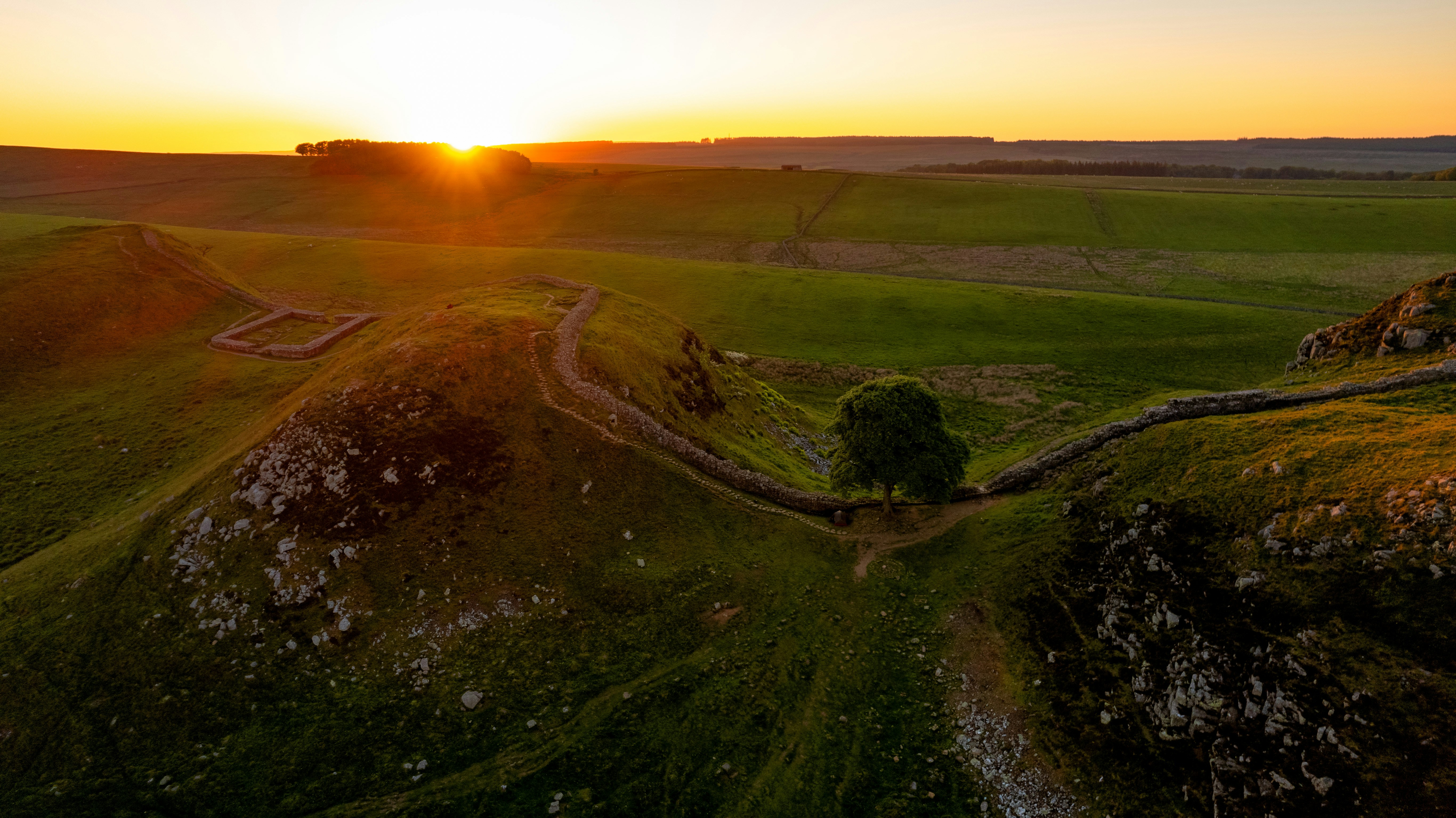
Photo by Mark mc neill on Unsplash
Time for one of my semi-regular updates on my plans and training to walk Hadrian’s Wall, and then we follow the wall's history into the modern era.
Member Update
Not much to update except that we want to remind members that you get a 20% discount in the Anglotopia store. We have a new book out this week - 101 Budget Britain Travel Tips 3rd Edition - and you can use the discount on it (and it's already discounted!). Use coupon code: FriendsAnglotopia2024
Forum highlights
- I’ve Started a Doctor Who Rewatch - Want to Join Me?
- Trailer Released for Grantchester Season 10
- Britain in 2026? Who’s Going?
- First Look at Young Sherlock Holmes - New Guy Ritchie Series
- Downton Abbey is coming back to PBS!
Sunday Post: Hadrian’s Wall Planning Update and the Wall's History Into the Modern Era
In respect to training, this last month hasn’t been great. Winter hit hard here in Northwest Indiana. Between extreme cold and several feet of snow, it hasn’t been safe or possible to do much walking outside at all. With less than two hundred days until the trip, I feel like this is a significant setback that I will be paying for for the next few months.
But I have to take heart, I expected bumps in the road. Before the cold spell really hit, I did manage to do my longest local walk yet - 7.5 miles (I followed the same trail twice in the same day). It was one of the hardest walks I’ve ever done, but I managed it, and I survived. I thought I would be really sore the next day, but I really wasn’t. In fact, I did get up and do another several-mile walk. So, while the distances aren’t there yet, I’m building slowly.
We’ve had a warm spell this week, so I’ve been able to start walking again, and I’ll start building up my distance again. Here in the Midwest, we tend to call a warm spell in February like this ‘fool’s spring’ - so I’m not fooled that winter is over. But we are going on a family vacation next week to a warmer destination that will involve lots of walking (not to England, unfortunately…), so I’m hoping that it’ll be a good, proper reset until the final months towards my trip in August.
From a trip planning perspective, things have been much more fruitful. A lot has happened in the last month after I booked my plane ticket. First, Mrs. Anglotopia is going to fly out and be at the finish line for me. I can’t think of a better way to end this walk than to be greeted by the love of my life at the end! We’ll then explore Yorkshire and London for the final few days of the trip. We plan to visit Yorkshire for a few days, and then finish in London before heading home.
A few weeks ago, I interviewed photographer and adventurer Quintin Lake again, who appeared on the podcast last year to talk about walking the entire coastline of Britain. He’s also done all of England’s National Trails, most recently Hadrian’s Wall. So, he was delighted to talk about what it was like when he did the walk and gave some tips and tricks. He was also kind enough to share his photography with us. That episode is coming out for members on March 11th.
I picked up some great tips that will help with my actual walk, and the planning I still have yet to do. My biggest question to him was - what do I do the day after I finish? After walking so intensely for 10 days, I think my body would hate just stopping. He recommended keeping moving. So, I think Mrs. Anglotopia and I will explore nearby Carlisle before taking the train onwards to York.
So, we plan to spend 2-3 days in Yorkshire. A few years ago, back in 2022, I’d planned to spend some time in Yorkshire. I even had everything booked. But a bunch of events forced me to cancel that leg of the trip. Ever since, I’ve been dying to get back to Yorkshire properly. So, hopefully this will begin making up for that. I don’t have everything planned out yet, but we hope to stay in York or near York and visit Castle Howard (Brideshead).
This week, I interviewed a Yorkshire tour guide for the podcast (that will come out in late March), and we talked quite a bit about the area - what to see and do, etc. He’s also kindly offered to show us around while we’re in the area. That’ll be perfect, as we won’t have a car.
That’s it for now. Now, it’s time to go back to discussing some history related to Hadrian’s Wall!
Archaeology Comes of Age
The 20th century saw Hadrian's Wall archaeology transform from Victorian antiquarianism into modern scientific investigation. Systematic excavations at major sites revealed the complexity of the frontier system in unprecedented detail.
At Housesteads (Vercovicium), often called Britain's most complete Roman fort, excavations exposed the entire layout of barracks, granaries, headquarters buildings, and the famous communal latrines that give modern visitors a vivid sense of Roman sanitation. The site, dramatically perched on the Whin Sill crags, became one of the wall's most visited attractions.
Chesters (Cilurnum), where John Clayton had first excavated in the 1840s, yielded one of the best-preserved Roman cavalry bath houses in Britain. The sophisticated heating systems and cold plunge pools demonstrated the engineering expertise the Romans brought to even the most remote outposts.
Birdoswald (Banna) proved particularly significant for understanding what happened after the Romans left. Excavations revealed that the fort continued to be occupied well into the 5th century, with one of the Roman granaries adapted into a timber hall resembling Anglo-Saxon construction. This discovery challenged the notion of a sudden Roman departure, suggesting instead a gradual transition during which Romano-British communities maintained some form of organization at former military sites.
At Corbridge (Corstopitum), excavations uncovered not a fort but a significant Roman town—the northernmost in the empire—complete with granaries, temples, and a remarkable collection of artifacts. The Corbridge Hoard, discovered in 1964, contained military equipment buried during a period of crisis, providing an extraordinary time capsule of Roman military life.
From Ruins to Recognition: World Heritage Status
The movement to protect Hadrian's Wall as a unified monument gathered momentum throughout the 20th century. The National Trust began acquiring land along the wall following the dispersal of much of the Clayton estate, ensuring that key sections would be preserved in perpetuity.
In 1987, Hadrian's Wall achieved the ultimate recognition: designation as a UNESCO World Heritage Site. The citation recognized it as "an outstanding example of Roman military architecture" and praised its "exceptional testimony to the organization of a military zone on the very edge of the Roman Empire."
The designation brought both opportunities and responsibilities. It attracted international attention and tourism but also required sophisticated management to balance public access with preservation. The wall's very popularity threatened the resource it celebrated.
In 2005, Hadrian's Wall became part of the transnational "Frontiers of the Roman Empire" World Heritage Site, linking it with the Antonine Wall in Scotland (added in 2008) and the Limes Germanicus and other Roman frontier fortifications across Europe. This recognition emphasized Hadrian's Wall not as an isolated British monument but as part of a continent-spanning system of Roman imperial control.
The Path Opens: England's 15th National Trail
For centuries, walking the length of Hadrian's Wall meant navigating a patchwork of public rights of way, private land, and rough terrain. All that changed on May 23, 2003, when the Hadrian's Wall Path officially opened as England's 15th National Trail.
The 84-mile route from Wallsend to Bowness-on-Solway took ten years to develop—four years longer than it took the Romans to build the wall itself. The extended timeline reflected the extraordinary care required to create a walking route through a World Heritage Site. An archaeologist was present every time a signpost or waymark was driven into the ground to ensure no damage to buried remains.
The trail was an immediate success. It became the first National Trail to follow the course of a UNESCO World Heritage Site, offering walkers an immersive journey through nearly two millennia of history. The route passes through dramatically varied landscapes: the urban areas of Newcastle and Carlisle, rolling farmland, the dramatic crags of the Whin Sill, and the salt marshes of the Solway coast.
Today, approximately 10,000 people walk the entire trail each year, with many more completing shorter sections. I can't wait to be one of them! The AD122 bus service (named with appropriate Roman humor) provides transport along the central section during summer months, allowing day walkers to access the most spectacular stretches.
The trail's success brought its own challenges. Footpath traffic accelerated erosion of vulnerable sections, particularly where the route coincided with the Pennine Way near Housesteads. Conservation measures including sustainable routing, geotextile reinforcement, and visitor education programs work to balance access with preservation.
The Sill: A New Gateway
In 2017, a striking new visitor center opened near Once Brewed in Northumberland. The Sill—named for the Whin Sill geological formation that gives the central wall its dramatic setting—was designed by architects Jane Darbyshire and David Kendall to echo the landscape's ancient shapes.
The building features a grass-covered roof that visitors can walk across, offering panoramic views of the surrounding countryside. Inside, interactive exhibitions tell the story of the wall, the landscape, and the communities that have inhabited this region for thousands of years. The Sill serves as the gateway to Northumberland National Park and a hub for exploring the central section of Hadrian's Wall.
The center represents a new approach to heritage interpretation, emphasizing the wall not as a static monument but as a living landscape with continuing stories to tell.
Discoveries Continue
Archaeological work along Hadrian's Wall has never stopped, and the 21st century has brought remarkable new discoveries.
In 2017, construction at Carlisle Cricket Club revealed the remains of a high-ranking Roman bathhouse—the largest building ever found along Hadrian's Wall. Subsequent excavations have uncovered evidence suggesting connections to Emperor Septimius Severus, who resided in Carlisle while campaigning in Scotland in the early 3rd century. Finds have included Tyrian purple dye—worth more than its weight in gold in the Roman era—suggesting occupation by individuals of the highest status.
At Vindolanda, the discoveries continue to astound. In 2017, excavators uncovered the only known Roman boxing gloves from anywhere in the Roman Empire, preserved by the site's remarkable anaerobic conditions. Ongoing excavations consistently reveal new tablets, shoes, and everyday objects that continue to transform our understanding of frontier life.
In 2021, workers for Northumbrian Water found a previously unknown three-meter section of the wall while repairing a water main in central Newcastle—a reminder that significant remains still lie beneath modern streets.
Most recently, in October 2025, volunteer archaeologists at Drumburgh uncovered a section of wall that had remained hidden for 2,000 years. Described as a "once-in-a-generation discovery," the find was particularly significant because the western section of the wall has largely been lost to centuries of stone robbing. Finding four courses of the original stone wall intact confirmed the accuracy of geophysical surveys and gave local communities something tangible to point to when asked where the wall ran.
1900 Years: The Anniversary Celebration
In 2022, Hadrian's Wall marked the 1900th anniversary of the beginning of its construction with a year-long festival of events, exhibitions, and celebrations. Hadrian's Wall 1900 brought together communities, cultural organizations, museums, and visitors in marking this extraordinary milestone.
The festival launched on January 24, 2022—what would have been Emperor Hadrian's 1946th birthday—with events ranging from the appropriately eccentric (an actor portraying Hadrian enjoying a bubble bath in the Roman bathhouse at Ravenglass) to the scholarly (lectures and exhibitions at museums along the wall's length). A cake-baking competition invited participants to "Bake a Cake for Hadrian," while a large-scale art installation at Housesteads recreated the Roman gatehouse, allowing visitors to experience views unseen since the garrison departed 1,600 years ago.
The anniversary attracted international media attention, with National Geographic naming Hadrian's Wall one of its 35 must-see destinations for 2022. The festival demonstrated how a 1,900-year-old monument could feel vital and engaging to modern audiences.
Challenges and Stewardship
Managing Hadrian's Wall in the 21st century requires balancing competing demands. Tourism brings economic benefits to rural communities along the wall corridor but also threatens the monument's preservation. Climate change poses new challenges, with more extreme weather events accelerating erosion.
The Hadrian's Wall Partnership coordinates efforts among English Heritage, the National Trust, Northumberland National Park, and local authorities to protect and promote the site. Conservation work continues year-round, much of it invisible to visitors: stabilizing walls, managing vegetation, monitoring erosion, and conducting the patient work of preservation.
The "Every Footstep Counts" campaign encourages visitors to stay on marked paths, particularly during wet winter months when the ground is most vulnerable. Circular walks dispersing visitors into the wider landscape help reduce pressure on the most popular sections.
The Wall Today
Hadrian's Wall today is Britain's largest Roman archaeological feature and one of its most popular tourist attractions. Millions visit each year, drawn by the combination of spectacular scenery, tangible history, and the sheer ambition of the Roman achievement.
The major sites—Housesteads, Chesters, Vindolanda, Birdoswald, Corbridge, and Segedunum at Wallsend—offer different perspectives on frontier life. Museums display artifacts ranging from the famous Vindolanda tablets to military equipment, religious objects, and the mundane debris of daily existence. Full-scale reconstructions at Vindolanda show what sections of the wall and its associated buildings actually looked like.
For walkers, the Hadrian's Wall Path offers one of Britain's most rewarding long-distance trails. The combination of history and landscape—Roman stonework framing views across Northumberland's wild countryside—creates an experience unlike any other walking route in the country.
The wall also serves as a powerful symbol in popular culture. Author George R.R. Martin has credited a visit to Hadrian's Wall in the early 1980s as inspiration for the Wall in his "Game of Thrones" novels. Standing on the ancient stones, trying to imagine what Roman soldiers felt looking north into unknown territory, planted the seed for one of fantasy literature's most iconic images.
Post a reply