Sunday Post: Blists Hill - The Sounds of Progress
This week, we visit Shropshire again, this time to a special living museum that connects me to my childhood and my ancestors.
Member Update
The light is at the end of the tunnel for the podcast hiatus! We recorded two interviews last week, and have two more scheduled in the coming week. We'll begin releasing them towards the middle of February.
Also, in case you missed the big news on our main feeds, we've completely overhauled the Anglotopia Store. I thought I would remind Friends of Anglotopia members that you have an exclusive 20% off coupon code you can use anytime that never expires: FriendsAnglotopia2024
Forum Highlights
- Britain in 2026? Who’s Going?
- Murder Before Evensong
- Bookish - New Post-WII Crime Drama
- Souvenirs in Remembrance of your Trip
- New Film - Downton Abbey Spoof - Fackham Hall
Sunday Post: Blists Hill - The Sounds of Progress
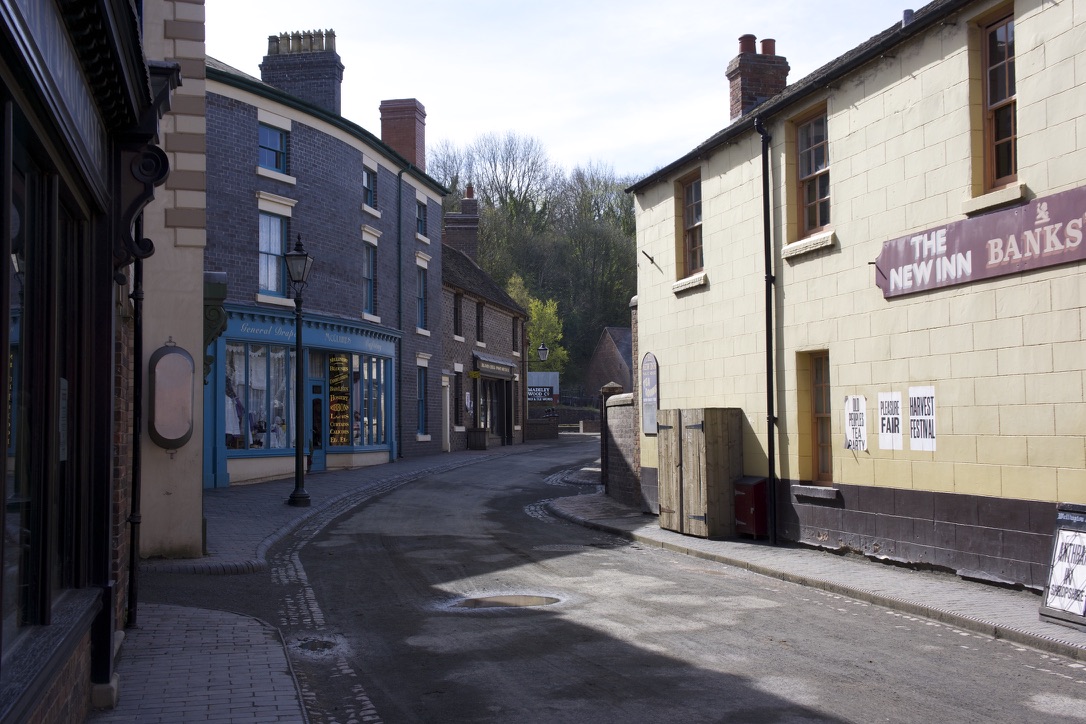
We'd arrived at Blists Hill early, just as it was about to open. It's when I prefer to visit major tourist attractions—they tend to be less busy, and I like having places to myself. Despite this, there was still a short line at the door of patient Brits waiting to be let inside. The clock struck ten, and the doors opened. We went through reception and began what the museum developers undoubtedly called "the tourism experience."
You're taken into darkness. We were alone. Off in the distance, you can hear a faint banging sound of metal on metal. It gets louder as you go through the darkness. Lights flash. Videos are projected around you. It's like you're being transported in a time machine. The banging got louder. It was almost ear-splitting. You can feel it in your body. And it’s brilliant (I should note that this experience was in 2016, I'm not sure if they still introduce you into the museum this way).
I'm no stranger to ear-splitting industrial noises. I grew up in Northwest Indiana, quite literally next door to the then Bethlehem Steel. The rhythmic thunder of heavy machinery was the soundtrack of my childhood—the hiss of molten metal, the groan of massive cranes, the perpetual orange glow on the night horizon. My grandfather worked those mills. My father worked in those mills. That sound meant paychecks and pensions, meant the working class could own homes and send kids to college. It was the sound of American possibility, borrowed wholesale from the very revolution Blists Hill commemorates.
But this was different. This noise went right to the heart. You felt it in your soul. It was the NOISE of Victorian Britain—or at least, what the curators wanted you to believe Victorian Britain sounded like. And standing there in the artificial darkness, I realized I was hearing an echo of an echo. The mills of my childhood were descendants of places like this, of Shropshire's iron foundries and coal mines, of the Severn Gorge where Abraham Darby first smelted iron with coke and accidentally changed the trajectory of human civilization.
Then the doors swung open, and we were spat out into daylight, seemingly transported back in time to the Victorian age.
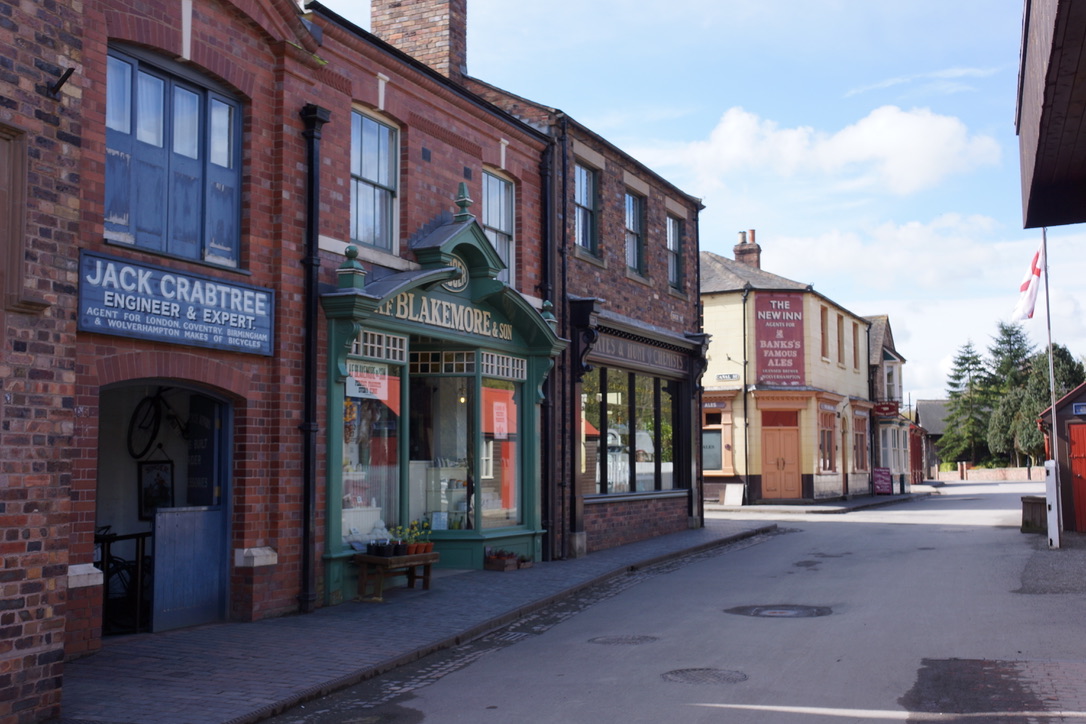
Blists Hill is an approximation. A gathering of buildings from across Britain, all sharing Victorian heritage, brought to this one place in the heart of where the Industrial Revolution began. It exists to illustrate what life was like in that era, to educate visitors on what industrialization meant for Britain and, eventually, the world.
Looking around at the tidy high street, the sweet shop with its colorful jars, the ironmonger with tools arranged just so, I had a small revelation. I'd always been fascinated by the Victorian age, but I'd never quite placed it properly in my mental timeline. Winston Churchill, for instance—I'd always thought of him as belonging to the Second World War, that black-and-white newsreel era of bunkers and broadcasts. But he was born in 1874, at the height of Victorian Britain. He was Victorian through and through—his upbringing, his class assumptions, his dress, his attitudes, his career ambitions. The Empire he spent his life defending was the one built in places like this, with that banging rhythm of iron on iron.
Blists Hill was the world Churchill was born into.
And here's where the wistfulness creeps in: it was just as much a fantasy then as it is now.
The Victorians were great mythologizers of themselves. They built monuments to progress while children worked in mines. They celebrated the empire while extracting the wealth of nations and oppressing the locals. They spoke of civilization while creating the conditions for unimaginable brutality. The late Victorian period that Blists Hill recreates—roughly 1890 to 1910—was genuinely a time of improvement. It was also the time period my ancestors decided was a good time to leave for the 'new world.' Universal education had arrived. Working conditions were slowly, grudgingly getting better. But women still couldn't vote. The poor still died young. The coal dust that should coat every surface of this pristine little village was instead coating the lungs of the workers who made it all possible.
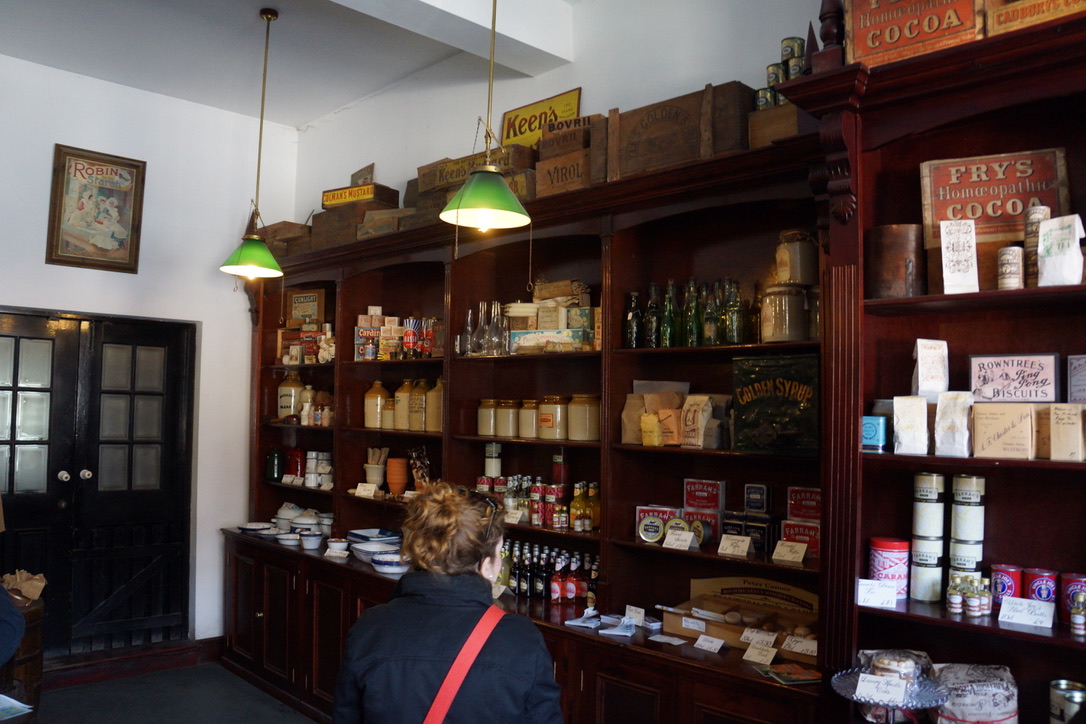
My first reaction to walking around Blists Hill is that it is perhaps too clean. The Victorian era was filthy. Everything should be covered in soot and grime. The people would have had blackened fingernails and hacking coughs. Here, the buildings are shiny and beautiful, and the actors in their period costumes have suspiciously white teeth. It's the Victorian age with the volume turned down on suffering.
But maybe that's the point. Maybe that's what we need from these places.
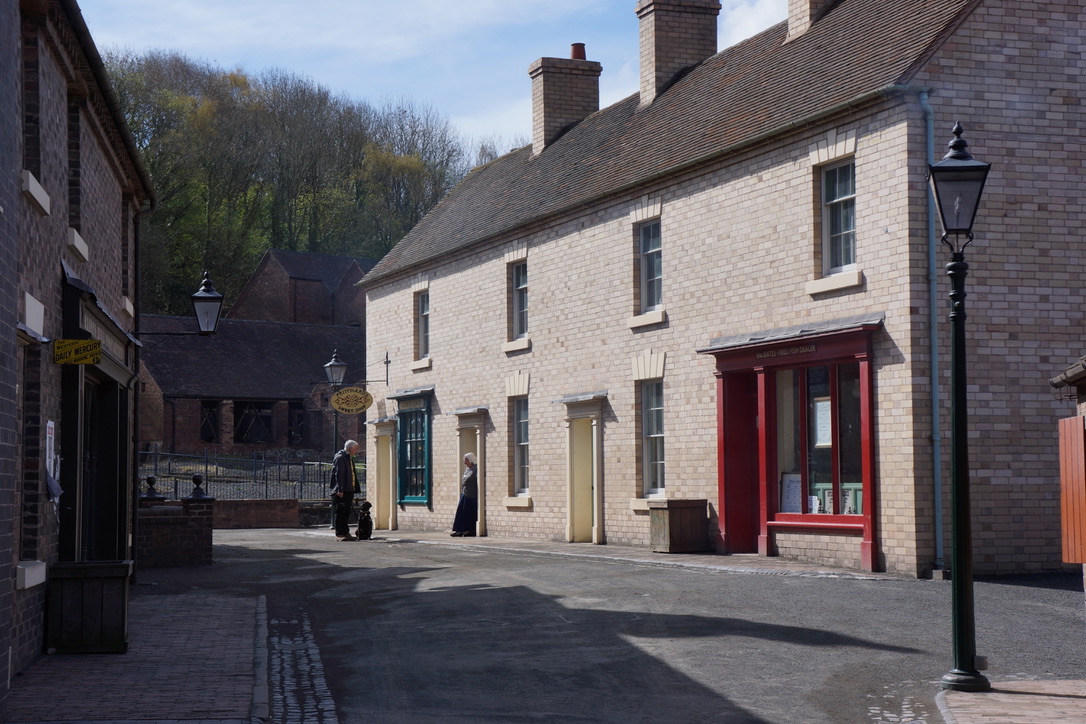
We arrived too early, and the village was still waking up. The streets that should have been bustling with costumed interpreters were largely empty. It felt like walking through a film set before the cameras roll—all the props in place, the lighting perfect, but the actors still in makeup (and it should come as no surprise that Blists Hill has been used several times as a film set). There was something haunting about it, this ghost town that existed to celebrate an age that was itself haunted by contradictions.
I wandered into the doctor's surgery and encountered the local schoolmaster, resplendent in black robes. He stayed in character, remarking that I didn't sound like I was from around there. I explained I was from Chicago. He paused, considering this across the gulf of his performed century. "You took a long time getting here," he said.
He had no idea how right he was.
My family came to America from Durham in the mid-1800s, pushed out by the very industrial forces this museum commemorates. They crossed an ocean to find work in the steel mills that would eventually rise along Lake Michigan—mills that borrowed their technology, their techniques, their thunderous rhythm from Shropshire and Sheffield and all the iron hearts of Britain. I grew up hearing that rhythm without knowing its origins. And now here I was, a century and a half later, walking backward through time to find the source of the sound.
There's a bank at Blists Hill where you can exchange your modern currency for pre-decimal pounds, shillings, and pence. You can then spend this beautifully archaic money in the village shops, puzzling over whether you have enough ha'pennies for a bag of sweets. It's a clever gimmick, and visitors love it. But there's something melancholy about it too—this performance of a monetary system that collapsed under the weight of modernity, this nostalgia for a time when money itself was more complicated, more textured, more *real* somehow.
The British have a complicated relationship with their industrial past. It built their empire and broke their bodies. It made them the workshop of the world and left entire regions hollowed out when the work moved elsewhere. Places like Blists Hill exist in that tension—preserving something that was never quite what we remember it being, mourning something that was often brutal, celebrating ingenuity while eliding exploitation.
Americans have our own version of this. I think of the steel mills of my childhood, many of them silent now or scaled down substantially, rusting along the lakeshore. We tell stories about what they meant—the jobs, the communities, the pride of making something with your hands. We leave out the pollution, the injuries, the union battles, the way the companies eventually abandoned those communities when cheaper labor beckoned elsewhere.
Progress always sounds like something. In Blists Hill, it sounds like that manufactured thunder in the darkness. In Indiana, it sounded like the mills I could hear from my bedroom window. Somewhere, right now, it sounds like server farms humming or robots assembling cars or the click of keyboards in open-plan offices.
The sound changes. The rhythm remains.
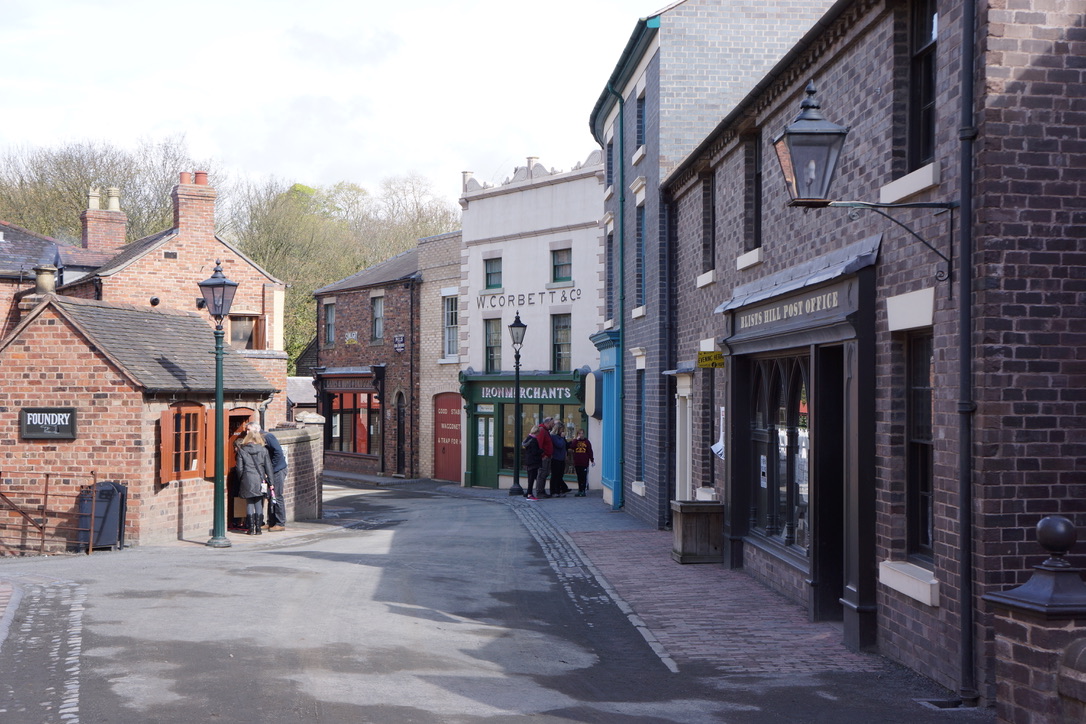
The most surprising sensory experience from walking around Blists Hill is just how quiet the place can be.
Blists Hill itself has a history worth knowing. The site opened in 1973, part of a broader effort to preserve and interpret the Ironbridge Gorge—the crucible of the Industrial Revolution and now a UNESCO World Heritage Site. The gorge had been in decline for decades, its furnaces cold, its mines abandoned, its significance largely forgotten outside academic circles. The creation of the Ironbridge Gorge Museum Trust in 1967 was an attempt to rescue that legacy before it crumbled entirely.
The location wasn't arbitrary. Blists Hill sits on the site of genuine industrial workings—blast furnaces, brick and tile works, canal infrastructure—dating back to the late eighteenth century. Some original structures remain, including the ruins of the brick and tile works across the canal. But the Trust's vision was more ambitious than simple preservation. They wanted to recreate a living, breathing community, to show visitors not just the machinery of industrialization but the texture of daily life it produced.
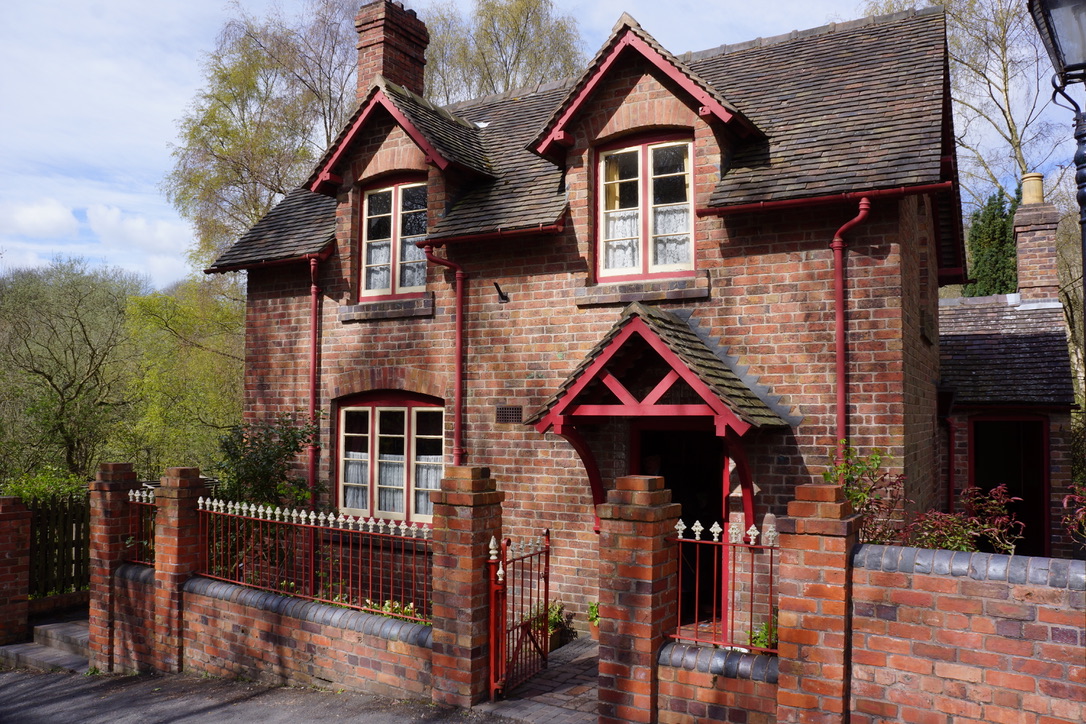
And so began a remarkable act of architectural rescue. Buildings facing demolition across Britain were documented, dismantled, transported to Shropshire, and rebuilt brick by brick. The doctor's surgery came from the Duke of Sutherland's estate in 1986. The iron foundry arrived from Woolwich in 1987. A tramcar that once carried passengers through Wolverhampton now serves as a Sunday school. Piece by piece, a village emerged that never existed—a composite portrait assembled from scattered fragments of a vanishing world.
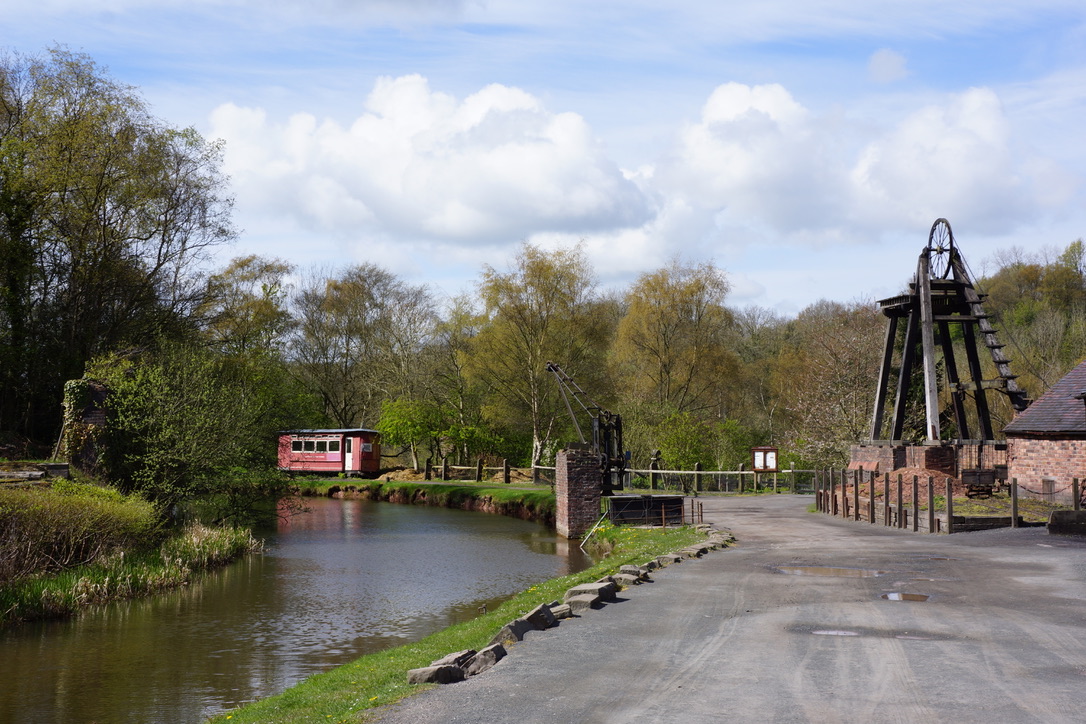
It's an approach that invites criticism. Blists Hill is, by design, inauthentic—a theme park masquerading as history, say the detractors. But there's something to be said for preservation through approximation. These buildings would be car parks and shopping centres by now if not for Blists Hill. The skills demonstrated inside them—tinsmithing, printing, candle-making—would exist only in books. Sometimes the only way to save the past is to rebuild it somewhere new and hope the ghost takes up residence.
By the time we left Blists Hill, the village had finally come alive. The fish and chip shop was frying, the demonstrators were demonstrating, children were running down the cobblestones with sticky sweets in hand. It had transformed from a ghost town into something that felt, if not real, then at least *lived in*. A place where the past could be visited, if not truly understood.
I paused at the exit, looking back at the high street. Somewhere in the distance, I could hear the forge starting up—that bang, bang, bang that had welcomed us hours before. It was a manufactured sound, curated and controlled, nothing like the genuine cacophony that would have filled a real Victorian industrial town. But it was enough to make me feel something I couldn't quite name.
Nostalgia for a time I never knew. A longing and affection for the places and people that made my own existence possible. Wonder at the human capacity to build and destroy and build again. And underneath it all, that persistent rhythm—the heartbeat of an age that shaped everything that came after, echoing still in a little village in Shropshire, echoing still in the silent mills along Lake Michigan, echoing still in whatever comes next.
The doors closed behind us. The sound faded. But I can hear it still, almost ten years later.
The story of Blists Hill is about to enter a new chapter. In October 2025, the UK government announced that the National Trust would take over the Ironbridge Gorge Museum Trust, with the transfer completing in March 2026. The trust which had run the site for almost sixty years was not at immediate risk of insolvency, but there were serious concerns about its medium- to long-term financial sustainability. Visitor numbers had dropped from 450,000 before the pandemic to around 330,000, and two sites—Broseley Pipeworks and the Tar Tunnel—were forced to close for 2025 due to financial constraints.
A £9 million government grant made the transfer possible. The National Trust - itself a creation of the optimism of the late-Victorian era - hopes to nearly double visitor numbers to 600,000 annually, and its 5.5 million members will now have free access to Blists Hill and the nine other museums in the gorge. It's a bittersweet transition—the independent trust that rescued and rebuilt these fragments of industrial Britain for six decades now passes the torch to an organization with deeper pockets and broader reach.
Whether the National Trust can preserve the quirky charm that makes Blists Hill feel like a genuine discovery remains to be seen. But at least the banging will continue. The forge will fire. And future visitors will still walk through that darkness and emerge, blinking, into a version of the past that never quite existed but somehow feels more real than the present we left behind.
Post a reply