Sunday Post: Hadrian’s Wall Training Update - Wall History From the Normans to the Border Wars
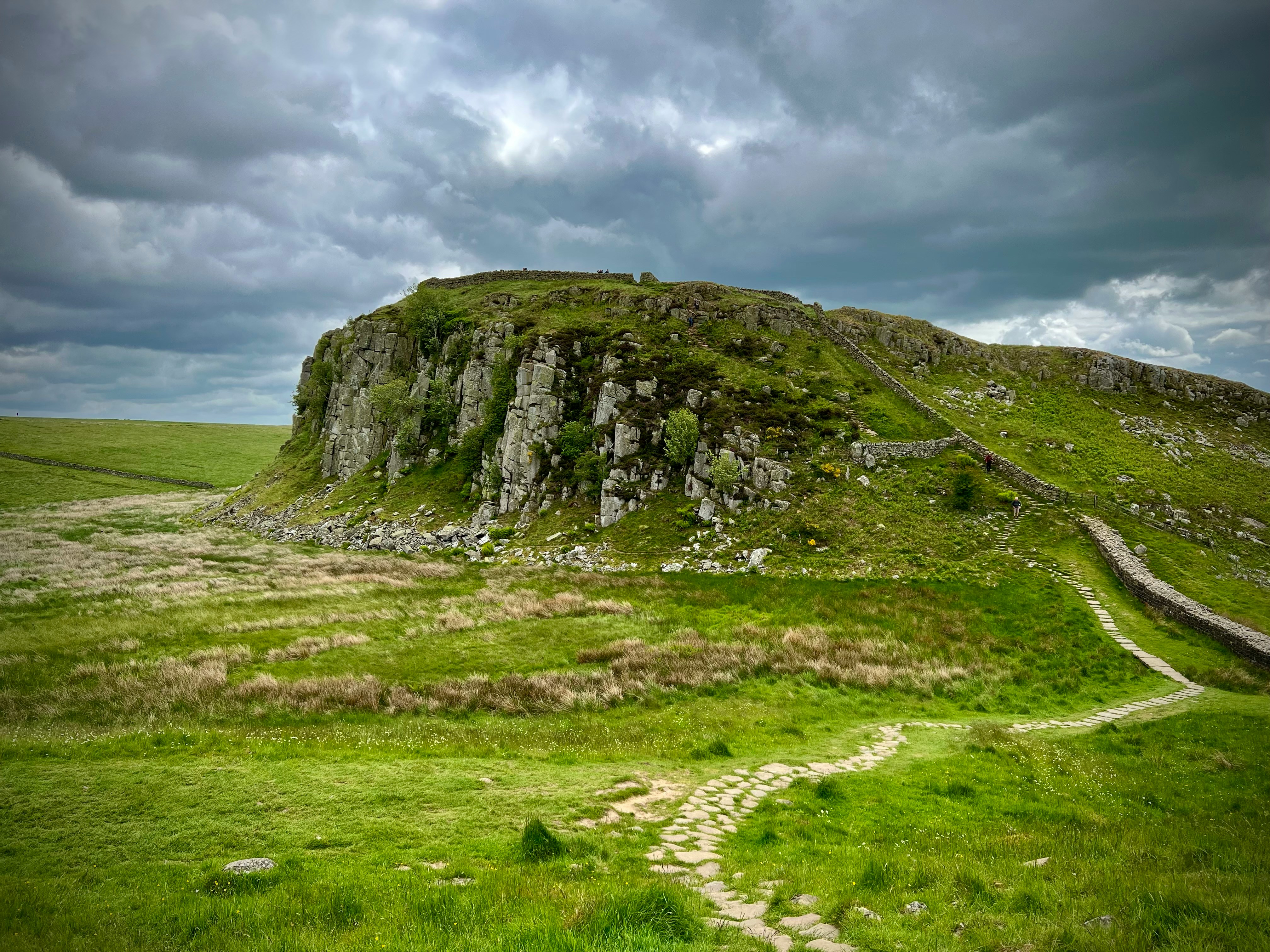
Photo by Gabe Fender on Unsplash
This week, I give another regular update on my plans to walk Hadrian’s Wall next year, and as we explore the history of this special place, we pick up after the Normans invaded Britain and investigate what happened to the formerly Roman wall through the turbulent centuries that followed. Despite the wall being in a mostly ruined state, it was the stage for much drama!
Member Update
Welcome to the 10 or so new members who have joined in the last week, thanks to our December promotion. Reminder that if you’d like to gift anyone a subscription to the Anglotopia Club, they will also receive a 2026 Anglotopia Calendar as part of the deal! You can do this by following this link and order there.
Here are the highlights from the member forum this week:
- All Creatures Great and Small Renewed for Two Further Seasons
- Britain in 2026? Who’s Going?
- What’s on your Britain Bucket List?
- Best British Long Distance Walks?
- New Film - Downton Abbey Spoof - Fackham Hall
Hadrian’s Wall Walk Planning Update
The big news that I can finally share is that we have partnered with Macs Adventure for my walk next year. They are sponsoring my walk - they are handling the bookings and logistics, I just need to book a flight (which should be covered by Hadrian’s Wall Calendar sales) and show up and start walking. Macs were actually recommended to us by a member of the Friends of Anglotopia Club (thank you!). I reached out to them earlier this year to see if they wanted to appear on the podcast (which you can see here), and after that was a huge success, we entered discussions on a partnership. It’s a simple thing, we’ll promote their Hadrian’s Wall walking holidays in the build-up to my trip, during, and after.
A few weeks ago, I got final confirmation that everything was booked and sorted. Macs have this brilliant app you install on your phone, and it has your entire itinerary - where you’re staying, where you’re walking, plus tips and information on the walk along the way. I’ve already virtually gone on the walk. They’ve also booked me in to stay at some really interesting places - one of which has a dark sky observatory. So, there will be much to share about everything in due course. They will also handle the logistics of moving my luggage from hotel to hotel, so I only need to carry a daypack with me on the walk. They also help arrange meals (breakfast included every day, and most hotels will pack me a lunch to carry - I'm on my own for dinner).
I’m not going to say exactly when and where I’ll be (I’ve been publishing on the internet long enough to know that you never tell people where you’re going to be and when), but I’ll be doing the walk in August, to hopefully have pleasant weather that’s not too hot and not too rainy (I’ll be prepared either way). I just need to book a plane ticket and get to Newcastle, and I can begin my walk. I will probably book my plane ticket in the new year - need to decide (or rather negotiate with my wife) how long I'll be able to stay in the UK after the walk.
The biggest decision to make was which direction to walk. I have decided to walk East to West, starting in Newcastle and ending in Bowness-on-Solway. There are pros and cons to each direction, but I mostly picked East to West to experience the feeling of walking out of a city into the open countryside. I’ve opted for their 10-day walking plan to complete the 84 miles over 10 days (well, really 9 days unless I start some of the walk the day I arrive in Newcastle). The longest stretch is 15 miles, the shortest stretch is six or so miles. I’ve set up a countdown on my phone to departure day - so I’m reminded several times a day what I’m preparing for.
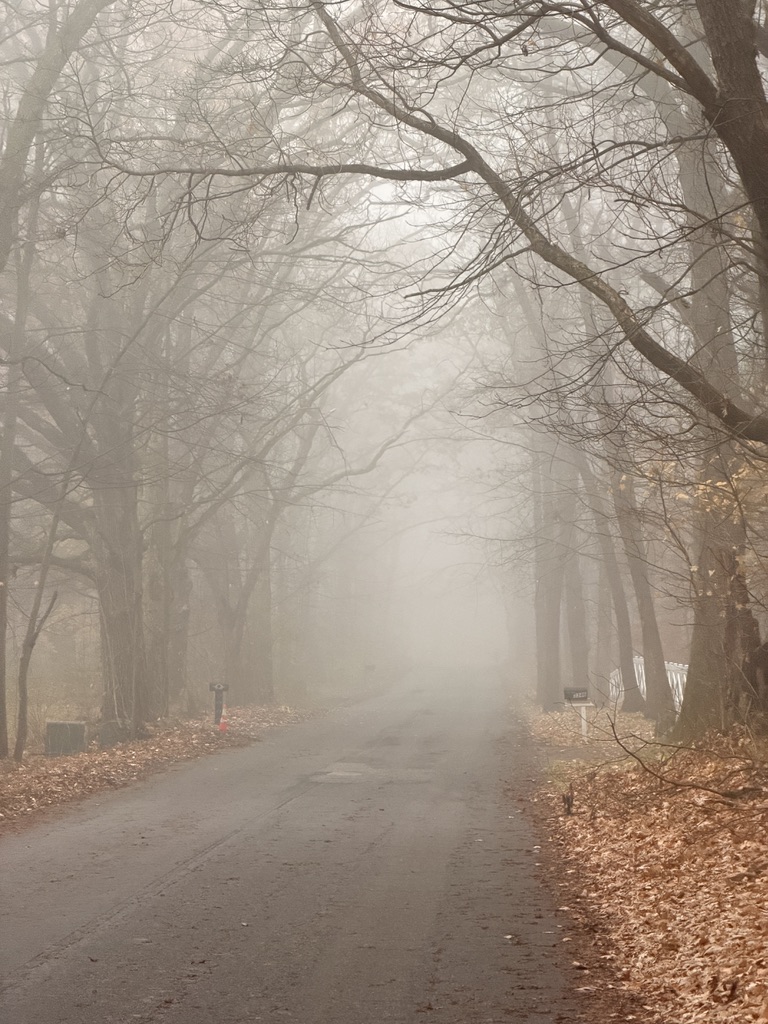
As for preparing, walking has been sporadic the last few weeks, mostly due to the weather here in Northern Indiana. We’ve been lucky the last few years to have very mild, relatively snow-free winters. But winter has come without mercy this year - we’ve already had two proper snowstorms, extreme cold, and several ‘snow days’ off of school. I don’t have a problem walking in the cold - it’s rather nice when you’ve worked up a sweat. But I do have a problem walking down my country roads when it’s been snowing, it’s just too dangerous. So, my new dog Hudson and I haven’t walked much lately, but we will as the weather allows.
But that’s OK - I can’t be too hard on myself. I still have plenty of time to train, and the really intense training according to my regimen/plan doesn’t even really start until the spring. But one critical element has changed since my last update - this walk is actually happening. Not only that, it actually HAS to happen because there is now business on the line and people are counting on me. No pressure!
The Forgotten Centuries
When William the Conqueror seized England in 1066, Hadrian's Wall had already stood as a crumbling monument for over six centuries. The Romans who built it were the stuff of legend, and the wall itself was more myth than memory. Yet the story of what happened to this ancient frontier during the medieval centuries, the turbulent Border Wars, is perhaps more interesting than what happened during the Roman era!
The Normans Arrive: A Convenient Quarry
The Normans faced an immediate challenge upon conquering England: securing the turbulent north. The region around Hadrian's Wall remained contested and dangerous, caught between the expanding Norman kingdom and the Kingdom of Scotland. William the Conqueror and his sons struggled to control these remote borderlands, far from their power base in London.
In 1092, William II (William Rufus) seized Carlisle from Dolfin, a Northumbrian warlord who likely held it as a vassal of the Scottish king. The Norman monarch immediately recognized the strategic value of the site, which had served the Romans for centuries. He ordered the construction of a castle directly atop the remains of the Roman fort of Luguvalium. Rather than quarrying fresh stone, his builders turned to the most convenient source imaginable: the crumbling but still substantial remains of Hadrian's Wall.
At the wall's eastern end, William Rufus's brother Robert Curthose built another castle on the site of the Roman fort of Pons Aelius, creating the fortress that would give Newcastle its name. The "New Castle" rose on high ground north of the Tyne Gorge, protecting the lowest crossing point of the river. Once again, ready-cut Roman stone provided the building materials.
By 1122, Henry I ordered Carlisle Castle rebuilt in stone, creating the great keep that still stands today. The castle incorporated Roman stonework throughout its construction, much of it bearing inscriptions and carvings that would only be understood centuries later. Carlisle would become, arguably, the most besieged fortress in British history, changing hands between English and Scottish forces repeatedly during the medieval period.
Holy Plunder: The Church Builds with Roman Stone
If the Normans used the wall for military purposes, the Church proved equally enthusiastic about exploiting this convenient quarry. The development of monasticism in northern England spurred extensive reuse of Roman masonry, a practice that had begun even in Anglo-Saxon times.
The monastery at Jarrow, where the Venerable Bede had written his history of the English people, incorporated Roman stones likely taken from either Hadrian's Wall or the gateway fort of Arbeia at South Shields. Hexham Abbey, despite being razed to the ground on multiple occasions during its long history, retains numerous Roman stones throughout its construction, believed to have been quarried from the fort at Coria (modern Corbridge).
Perhaps the most striking example is Lanercost Priory, founded by Augustinian canons in the 12th century. The priory incorporates a remarkable number of Roman stones, many still bearing Latin inscriptions. One records the presence of Legio VI Victrix, the Sixth Victorious Legion, which had been stationed in Britain since Emperor Hadrian himself ordered them there in AD 119. When Lanercost's monastic buildings were dissolved in the 16th century, the stone was plundered yet again—this time for the construction of a stately home for the Dacre family.
The term "spolia"—from the Latin meaning animal hide stripped from the body, later applied to the "spoils of war"—describes this practice of incorporating building material from earlier structures. Along Hadrian's Wall, Roman altars became doorsteps, inscribed centurial stones became foundation blocks, and carved reliefs found their way into church walls facing inward, their pagan imagery hidden from view but preserved nonetheless.
# Three Centuries of Blood: The Border Wars
It's important to note that Hadrian's Wall never formed the border between England and Scotland. The actual border lies some distance to the north, following the Tweed and the Cheviot hills. Yet the wall zone became central to one of the longest and most brutal periods of conflict in British history.
The trouble began in earnest in 1286, when Scottish King Alexander III broke his neck falling from his horse on a stormy March night. The uncertain succession gave Edward I of England the opportunity he had been waiting for, launching a series of incursions that ignited centuries of Anglo-Scottish hostility.
The conflicts came thick and fast: the slaughter of up to 8,000 Scots by Edward I at Berwick in 1296; William Wallace's retaliatory raids into Cumberland and Northumberland in 1297; Robert the Bruce's devastating invasion via the Solway in 1311; and the Scottish triumph at Bannockburn in 1314. These became known as the Wars of Scottish Independence, though for the people living along Hadrian's Wall, independence was a distant concept—survival was the only priority.
Following Bruce's victory at Bannockburn, the Scots subjected Northumbria to a sustained campaign of raiding and destruction. One chronicle records how in 1319, Scottish raiders "set the whole of Gilsland alight, the grain crop on which the inhabitants depended for the following year as well as the barns in which it was stored." For the people of the wall zone, medieval warfare meant not just occasional battles but systematic destruction of everything needed for survival.
The Busy Gap Rogues: Rise of the Border Reivers
Out of this crucible of violence emerged one of Britain's most distinctive—and notorious—cultures: the Border Reivers. These were raiders who operated along the Anglo-Scottish border from the late 13th century until the early 17th, raiding without regard to nationality. English reivers plundered Scottish farms; Scottish reivers pillaged English villages; and often they raided together when profitable.
The central section of Hadrian's Wall became a stronghold for these outlaws. A gap in the crags near Housesteads, known as Busy Gap, became a favorite gathering place for forming raiding parties or "trysts" for herding stolen cattle. The reivers who operated from this remote location became so infamous that they were known as far away as Newcastle as the "Busy Gap Rogues." These men were barred from entering Newcastle's guilds and conducting any business in the town.
By 1297, the borderlands had been divided into administrative areas called Marches—the East, Middle, and West Marches on each side of the border—each overseen by wardens appointed to maintain some semblance of order. The region around Hadrian's Wall fell mainly within the English Middle March. Yet the wardens proved as likely to engage in reiving as to prevent it, and lawlessness became a way of life.
To protect themselves, wealthy families built distinctive defensive structures. Pele towers rose across the landscape—square stone towers with thick walls, overhanging battlements from which to throw hot water and stones on attackers, and beacons at their tops to summon help or warn of danger. Bastles, smaller fortified farmhouses, dotted the countryside. Remarkably, many were built within the ruins of Roman forts along Hadrian's Wall, using Roman stone for their construction.
The reiving families—Armstrongs, Grahams, Kerrs, Elliots, Scotts—became famous in ballads and legend for their daring raids. They rode hardy ponies capable of picking their way across boggy moorland, wore light armor called "steel bonnets," and followed a code that valued clan loyalty above all else. The English or Scottish crown meant little; family meant everything.
Elizabeth's Wall: Almost Rebuilt
By the death of Elizabeth I in 1603, the border region had descended into such chaos that the English government seriously considered rebuilding and refortifying Hadrian's Wall. For a brief moment, the ancient Roman frontier nearly received a second life as a defensive barrier.
When Elizabeth died, there was an especially violent outbreak of raiding known as "Ill Week," resulting from the convenient belief that the laws of a kingdom were suspended between the death of a sovereign and the proclamation of their successor. The reivers exploited this interregnum with characteristic enthusiasm.
The plan to rebuild the wall never came to fruition because of an event that changed British history: the Union of the Crowns. James VI of Scotland inherited the English throne as James I, uniting the two kingdoms under a single monarch. James moved hard against the reivers, abolishing border law and renaming the "Borders" as the "Middle Shires" to promote unity. He dealt out stern justice to the most troublesome clan leaders, executing or exiling them. The era of reiving came to an end, and Hadrian's Wall ceased to be a potential military asset.
As to what happened after that, stay tuned for the next Hadrian’s Wall update next month to find out! The border troubles between England and Scotland were far from over.
Post a reply