Sunday Post: The Castle Ruin and the New House it Replaced
This week, I explore a special place I was surprised to discover I hadn't written about properly yet - a beautiful National Trust property that includes not one but two things worth visiting - a castle ruin and a great house.
Member Update
Reminder to Members that you can give the gift of membership in the Friends of Anglotopia Club. Annual memberships are available for gift giving. Just click this link and check out. They will be notified on a day of your choice that their membership has been gifted to them. They then log in, and they’re good to go! We sold quite a few gifts last year, so I hope everyone is able to recommend us again as a gift for the Anglophile in your life!
Here are some highlights from the forum this week:
Here are some highlights from the forum this week:
- New Film - Downton Abbey Spoof - Fackham Hall
- Bill Bryson Has a New Book Out - Sort Of
- Off-the- Beaten-Track Experiences in the UK
- Bridget Jones Mad About the Boy Discussion Thread
- Autumn in England
Sunday Post: The Castle Ruin and the New House it Replaced
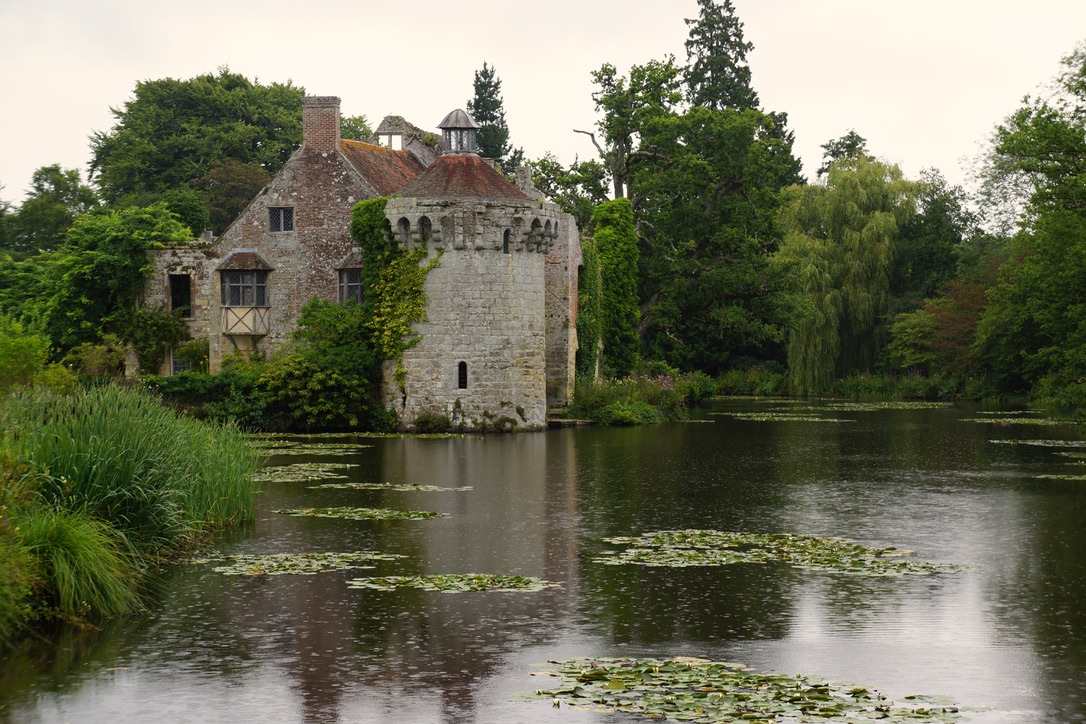
Scotney Castle is one of the most unique National Trust properties that I’ve had the luck to visit. It was also the most surprising and sublime, in almost twenty years of travel. It’s a strange place, because there are actually two significant buildings here worth seeing. There’s ‘new’ Scotney Castle, which is a typical English manor house of the Imperial Age, and then there’s ‘Old Scotney Castle’, which is a romantic ruin deliberately kept at the end of the garden to simply look pretty.
I arrived on a rainy day in England, and I’d spent the day exploring Kent and Sussex. I had the entire day to visit as many special places as the summer daylight would allow, and I certainly wasn’t going to let the rain, or a lack of an umbrella, put a wrench in any of my plans. Until the day before, when I was scrolling the National Trust app for things nearby to do, I’d never even heard of Scotney Castle. When I arrived at lunchtime, I was surprised to find that not only would I get the pleasure of visiting a Great House, but I would also get the pleasure of visiting a great castle that was the previous house.
After getting through the car park and the admissions area, I made my way to the castle. I was determined to see the castle before the rain started again, so I decided to skip the ‘new’ house until after I’d visited the castle, so I made the trek through the gardens to the romantic ruin. As I approached, my breath was taken away by how beautiful it was. In front of me was a beautiful castle ruin that had clearly been deliberately destroyed, with the most sublime gardens laid out around it, creating a sumptuous, romantic picture of an English Castle ruin. The effect worked. I was in awe.
But why was there a castle ruin here as garden decoration at all? The original castle was built around 1378-1380 by Roger Ashburnham, who received a "licence to crenellate" - essentially permission to fortify his manor house. The castle featured a circular tower and moat, typical of late medieval defensive architecture, though by this period, such castles were as much about status as defense.
The property passed through several families, including the Darell family, who held it for nearly 350 years. During the 17th century, the castle was modified with a new wing, and it served as a Catholic refuge; the Darells hid a priest in a secret chamber during the Reformation. By the early 19th century, Old Scotney had become outdated and somewhat inconvenient to live in. The damp, moated site wasn’t ideal for comfortable living, and the status symbol became having a proper new house rather than living in an old, drafty castle.
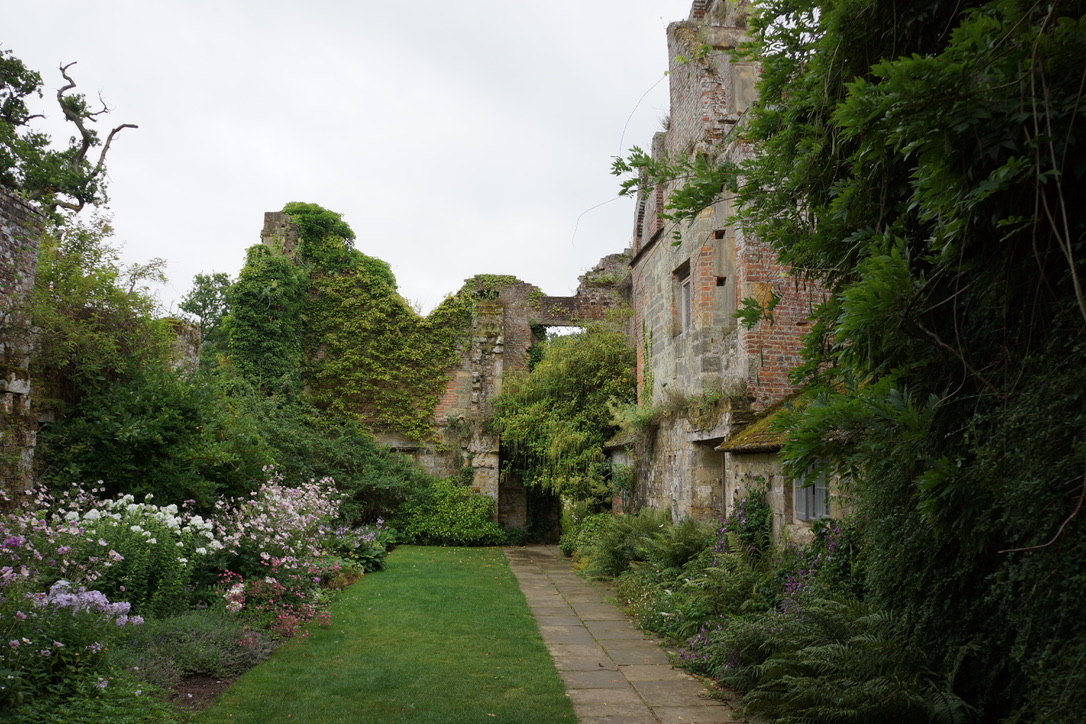
So, the family abandoned the castle, building a new house and letting the original castle fall into ruin as a garden decoration. In 1835, Edward Hussey III inherited the estate and commissioned architect Anthony Salvin to design a new house on higher ground with better views. Hussey was influenced by the Picturesque Movement, which celebrated romantic, naturalistic landscapes.
Rather than demolishing the old castle completely, Hussey deliberately preserved it as a romantic ruin within his landscaped gardens—one of the earliest examples of conscious ruin preservation for aesthetic purposes. Rather than wait for the ravages of time and the English weather, he had parts of the old castle demolished to create the most picturesque view possible from his new house.
The closer I got to the old castle, the rain started, first a drizzle, and then it poured. I was caught out, but I didn’t care simply because there is almost nothing more beautiful than being in a perfect English landscape garden, even in the rain. However, I did walk a little faster to get to the covered security of the old castle.
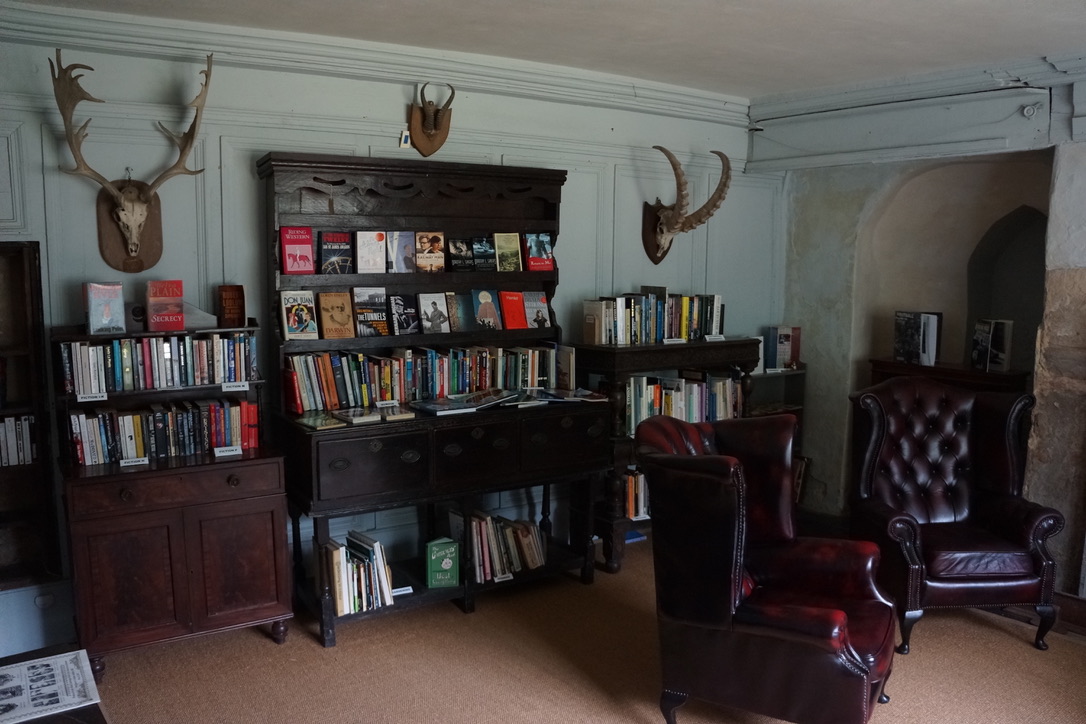
I was delighted to find that it was a complete ruin. While parts of the castle had been deliberately ruined for the effect, it was still a semi-habitable building, which provided me with some nice respite from the weather. Inside one room was a lovely secondhand honesty bookshop, with two wingback chairs for visitors to stop and enjoy the comfort of the room (and one assumes browse through the books if, for example, it’s raining outside). The room had the most lovely old smell - a combination of damp, leather, and old carpets. The views from the dusty old windows were just as lovely as the views outside. There is more to this old castle than a second-hand honesty bookshop, but that was the only part open to the public.
The rain soon died down, and I made the trek back up to the main house to explore the latter legacy of the family that allowed this castle to be ruined on purpose.
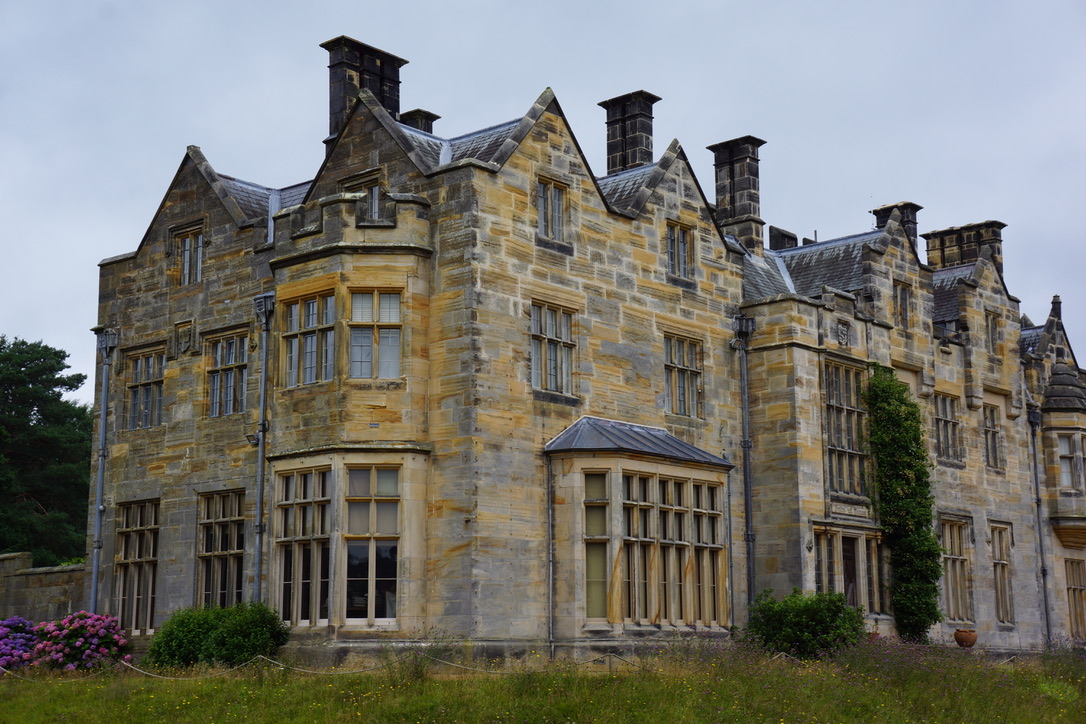
The New Castle, completed in the 1840s, is a Tudor-Revival style country house, and the gardens around the Old Castle ruins became one of the finest examples of picturesque landscape design in England. New Scotney Castle was designed by Anthony Salvin, one of the leading country house architects of the Victorian era, known for his expertise in both castle restoration and Tudor Revival style. Construction began in 1837 and was completed by 1843.
The house is built of local sandstone in an Elizabethan Revival style, featuring an asymmetrical design typical of Tudor architecture, Prominent gables and tall chimneys, Mullioned windows, and a tower that echoes the round tower of the old castle below.
Salvin positioned the house on a hillside specifically to provide commanding views down to the Old Castle ruins and the quarry garden - the picturesque landscape was integral to the design from the start. Every aspect was thought through and had a purpose, introducing order to a previously wild landscape.
One thing that struck me on my walk back from the Old Castle was that the ‘new’ castle also looked picturesque in its created landscape. It was something to behold. The rain returned, and I had to quicken my footsteps. Visiting the new house was a bit of an afterthought for me, as my original attraction was to see the castle ruin. So, it was nice to have time to wander through a bonus stately home.
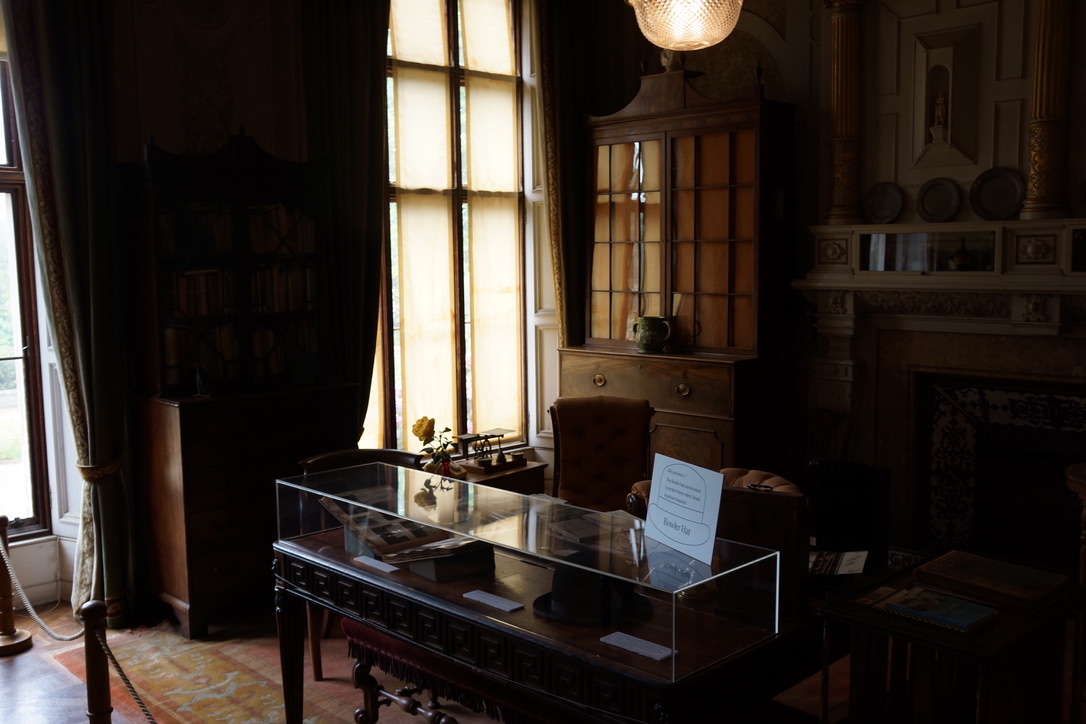
The house was a warm respite from the chilly summer rain. It was also an excellent opportunity to learn more about the family that lived in this wonderful place. Edward Hussey III (1807-1894) was a wealthy landowner who inherited Scotney through his grandmother, a member of the Darell family. He was an aesthete deeply influenced by the Picturesque Movement and the writings of William Gilpin.
His vision for Scotney was to create a "living painting" - the romantic ruin framed by carefully planned plantings. Hussey worked closely with landscape designer William Sawrey Gilpin (nephew of the theorist) to create the gardens, planting rhododendrons, azaleas, and wisteria around the old castle to enhance its romantic appearance.
The Hussey family continued living at New Scotney for several generations. Edward Hussey III lived there until his death in 1894. His descendants remained until the estate passed to the National Trust in 1970. Christopher Hussey (1899-1970), Edward's great-grandson, was the last private owner and donated the property to the National Trust. Ironically, Christopher Hussey was notable for being the architectural editor of Country Life magazine and a respected writer on English country houses and gardens.
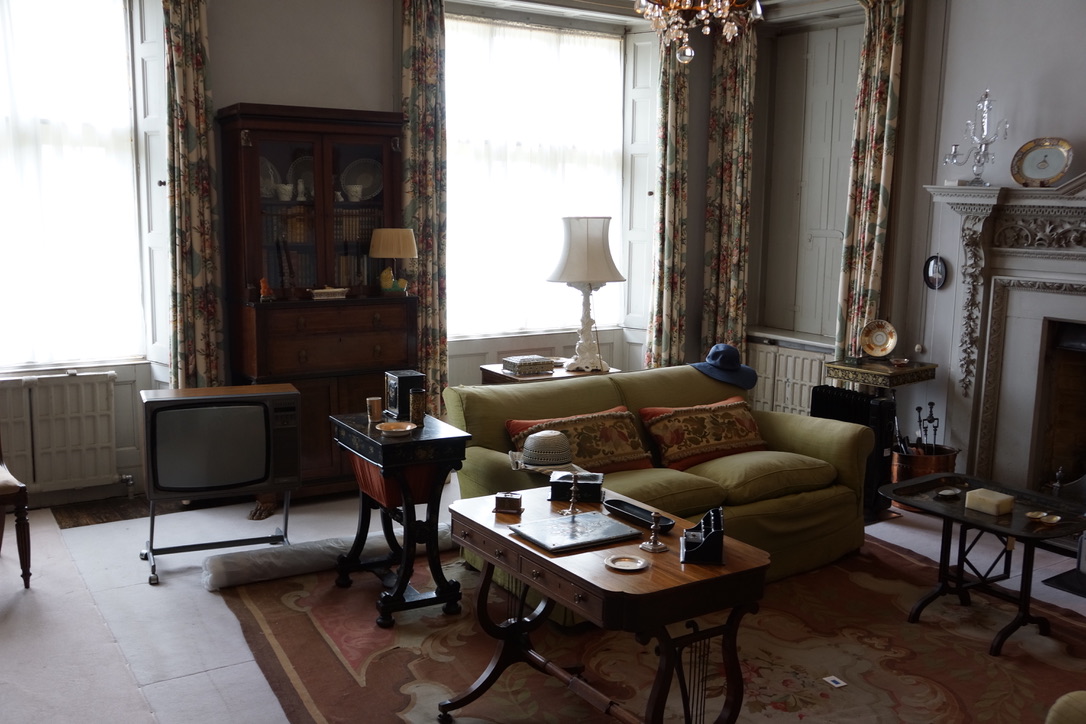
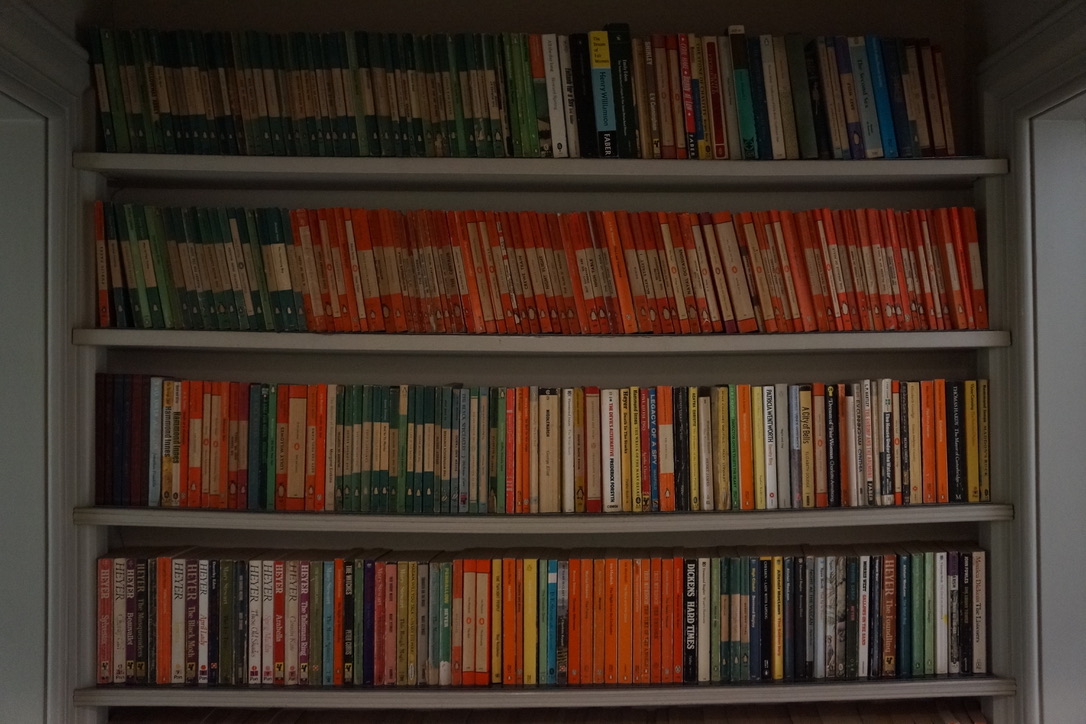
The house, I was delighted to see, had been kept in the state in which it was left in the 1970s, so you got a window into the late twentieth-century aristocratic life. Imagine if the Crawley family from Downton Abbey continued to the 1970s - what would that have been like? Well, you could see here at a place like New Scotney Castle. My favorite detail was not the massive library filled with beautiful leather-bound books (though impressive it was), but rather a smaller library that was in a passageway between rooms, on bowing shelves. They contained what looked like the largest collection of Penguin classics books I’d ever seen in person, with their distinctive orange and teal covers. For those that don’t know - these were essentially ‘bargain’ books, so it says a lot about aristocratic life that they had the cheapest possible paperbacks, lovingly organized in a passageway.
The house is a time capsule to twentieth-century aristocratic life and decline, similar in a way to the house at Calke Abbey, except here at Scotney Castle, there aren’t centuries of dusty detritus, but rather carefully chosen artifacts to showcase life before the house became what is essentially a museum. Corridors were dark due to the overcast weather outside, and most of the illumination was provided by the antique lighting within the house, which created a beautiful, thoughtful atmosphere that made it a joy to wander around. I pretty much had the place to myself (I was there on a weekday), so it was almost as if I were the only guest at an aristocratic house party, making myself at home. It looks like the family had simply stepped out of the room for a moment.
It’s a stark contrast to the ruin at the bottom of the garden, which is, well, a ruin. And this great house, which, while a family no longer lives here, is essentially a preserved ruin to British aristocratic excess. I loved every moment of my visit to the old and new Scotney Castles (and I really enjoyed exiting through the cafe for tea and cake).
Feel free to browse a gallery of all of the pictures I was able to take that day. It was a real treat to visit!
Post a reply