Sunday Post: Preparing for Hadrian’s Wall October Update and Why Was the Wall Abandoned?
This week, I talk about some major updates on my quest to walk Hadrian's Wall next summer, then we explore why the wall was abandoned and what happened to it directly after.
Member Update
Not much to update on the membership front right now, we’re holding around 250 members, but as we go into the holiday season and launch a number of promotions, we expect this to change. We’d also like to remind monthly members that your monthly charge is coming up on November 1st. We’ve also been continuing to add videos to the new video app. Check them out!
Also, we want to give people plenty of advance notice so it doesn’t come as a surprise. Like last year, the Anglotopia Podcast will be going on hiatus during the US holiday period. We’re still settling on dates, but there will definitely be a break for Thanksgiving, a few more episodes after that, and then a long break until the new year, when we begin the march to our 100th episode.
Highlights from the chat community this week:
- Bill Bryson Has a New Book Out - Sort Of
- 28 Years Later New Trailer Released
- Downton Abbey: The Grand Finale - Final Trailer
- Bridget Jones Mad About the Boy Discussion Thread
- Off-the- Beaten-Track Experiences in the UK
Sunday Post: Preparing for Hadrian’s Wall October Update and Why Was the Wall Abandoned?
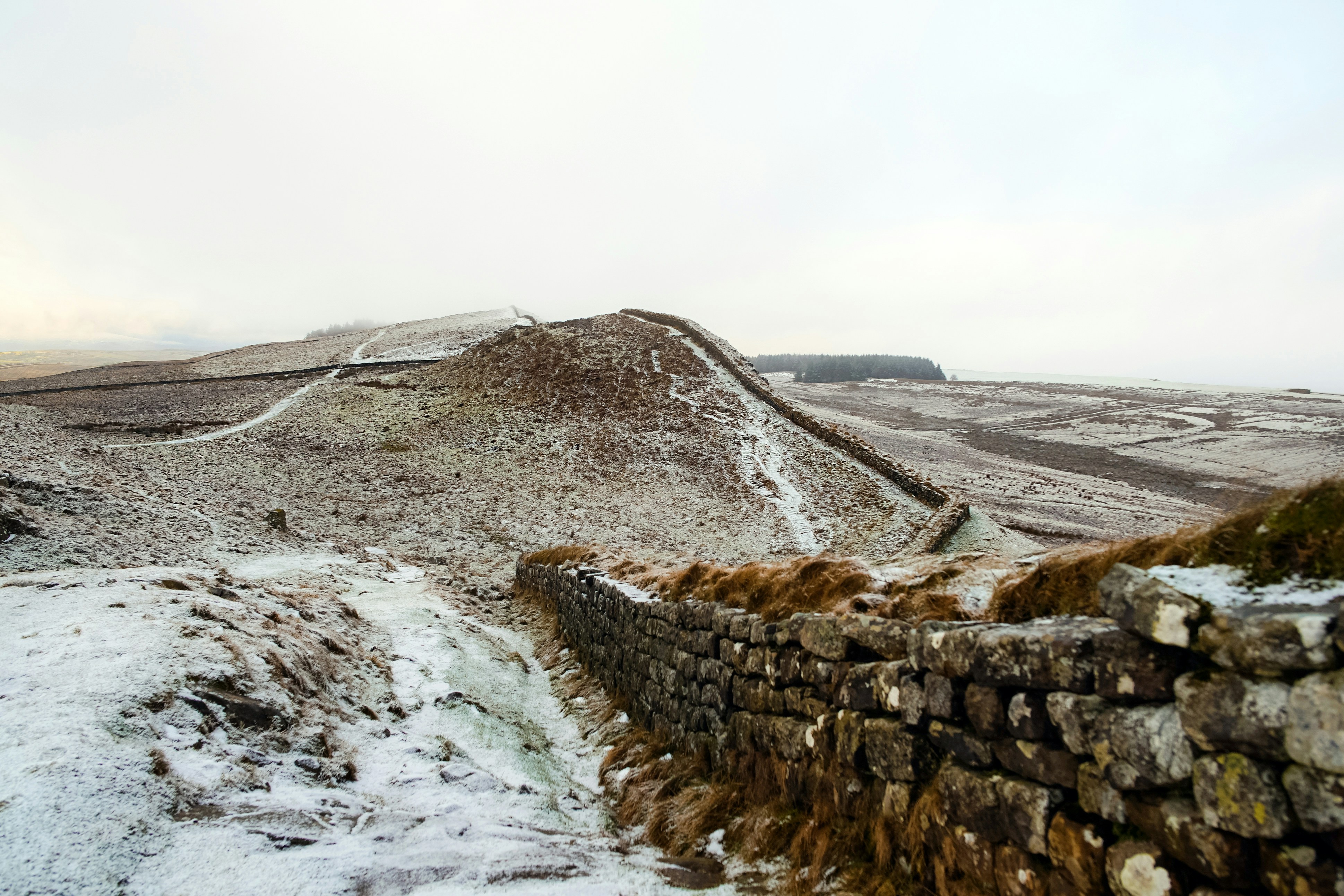
October has been a critical month in my preparations to walk Hadrian’s Wall next summer. There’s a lot of ground to cover - no pun intended- so I’ll just dive right in.
Introducing Hudson
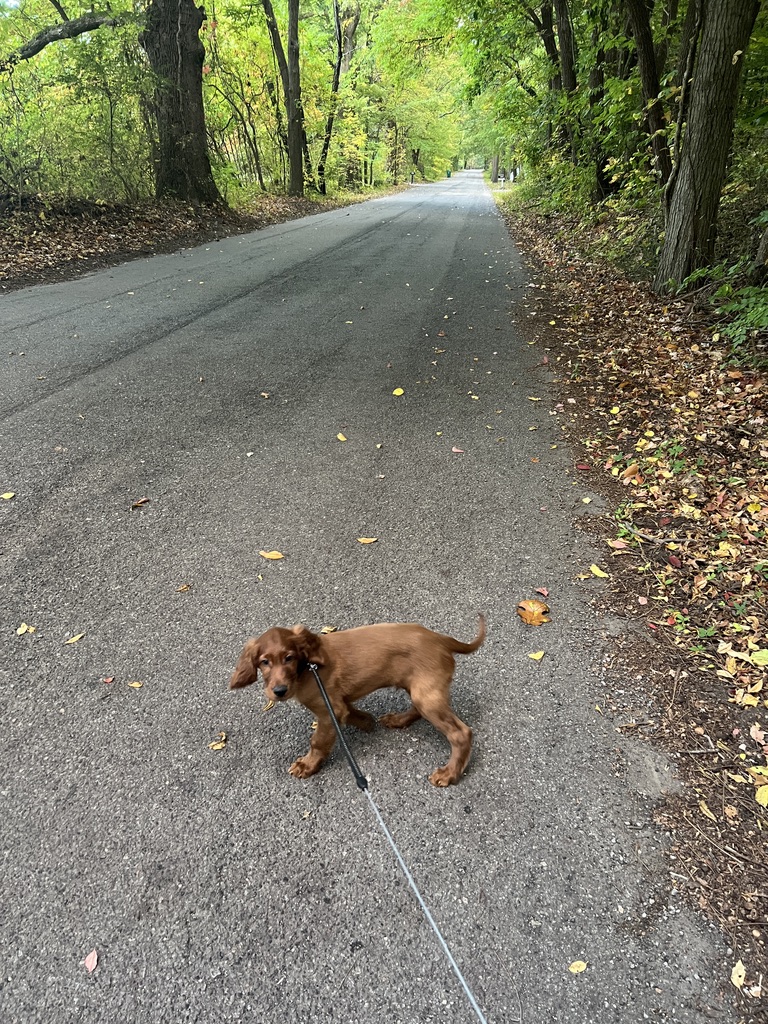
We had a new addition to the Anglotopia family earlier this month when we adopted Hudson, our new Irish Setter puppy. I’ve wanted an Irish Setter for over 20 years (long story short, I walked an Irish Setter every day when I was a kid, and fell in love with the breed). Mrs. Anglotopia bought me an Irish Setter for our 19th wedding anniversary, and he came home earlier this month. It’s been a whirlwind of puppyness since then.
(A side note on the name, I've always wanted an Irish Setter named Hudson - I've had the name picked out literally for 20 years. Many of you may think Winston would be a suitable name for him (after Churchill); however, my late last dog was named Winston, and it feels too soon to use the name again. I did consider Horatio, but... maybe for the next one).
What does my getting a new dog have to do with Hadrian’s Wall? Well, I now have a walking buddy to help keep me motivated to train for the walk next year. Anyone who’s known Setters will know that they have a TON of energy they need to expel, so I will have to walk him every day - sometimes twice a day. So, that will help me keep my mileage up and stay used to walking long distances. He’s still a puppy, so we’re not walking too far yet, but we’re firm walking buddies already, and he looks forward to our daily walks (and so do I). He’s going to be a critical part of my training as my mileage has to increase from next spring. Hudson is a very good boy; he walks well, has a lovely demeanor, and he's smitten with me (and I'm smitten with him). He's the best puppy ever (says probably every puppy dad).
A Real Training Plan
I’ve also set up a real training regimen for the walk. My favorite AI tool is Claude, so I asked Claude to develop a training plan for me for the next 10 months that will allow me to increase my mileage at a steady pace so that by the time I do the walk next summer, I’ll be physically ready to actually walk 84 miles in a row, on purpose. I’ve been following it for a few weeks, and it’s been surprising so far. At this stage, I’m not really walking much more than I have been all summer, and it includes rest days, which is nice. But with the dog, I have to walk every day anyway, so really, I’m walking more than the plan laid out, which is good!
It was also helpful in helping me find walks in my local area that I can get some real distance on. This research is hard to do, and I like some variety in my walks, because when I get bored with my walks, I tend to talk myself out of going on them. I’ve discovered some walks I didn’t know about, that are not that far of a drive for me. I’ve also discovered some nice walks in local parks in Northwest Indiana. I’m trying at least one new walk a week. Most days, though, I’m still just walking down my street, which I'm starting to hate doing - despite living in the country, people speed down my street like it’s a freeway, and it’s very dangerous. I don’t have a solution to this problem (the solution is not a treadmill, we have one and I hate it, and the dog has to walk no matter what!).
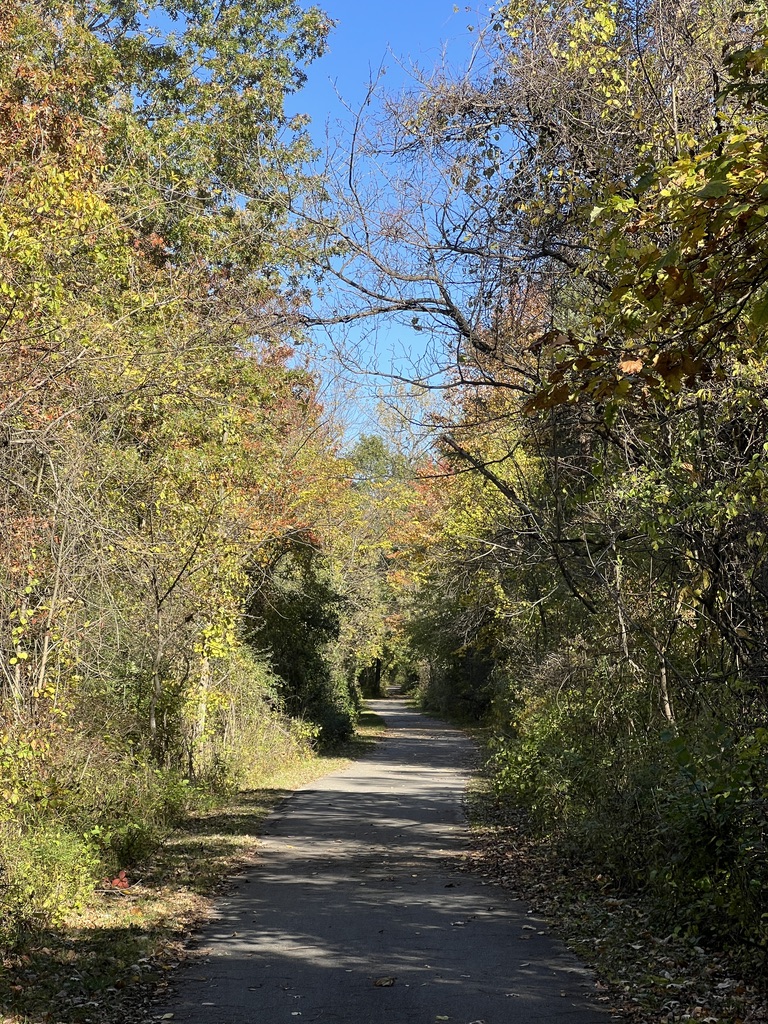
So, anyway, the plan is going well. It’s a mix of short walks during the week, 1-2 or so miles. Then on the weekends, I have to go on one really long walk. Today, for example, I walked almost four miles in the Indiana Dunes National Park, which was lovely. Nothing like a nice autumn walk through the Indiana Dunes Bailley-Chellburg homestead, suitably pretty with all the fall foliage! This phase of the walking will continue until about the spring, when things will get a little more intense. Then by next summer, I’ll be walking every day, trying to build distance stamina, and moving to two long walks every weekend.
It’s no joke that just the training for this walk is turning into an almost part-time job! But I know it’ll be worth it, in the end. When all of this is said and done, I’ll know that I can tackle long walks like this, my health will improve, and I’ll have seen some beautiful English landscapes! And I will have proven to myself that I can still do big things. Long term, my hope is that all this training won’t be for just one long walk. I’m already thinking about the long walks in England I want to take after Hadrian’s Wall!
It's for my health, I promise (and going to Britain as much as humanly possible...).
Planning Ahead
Planning for the trip itself also had some major steps forward in October. I’ve just about sold enough Hadrian’s Wall Calendars to pay for my plane ticket next summer. We still have plenty of calendars! Please buy one! Every calendar sold will go towards the rest of my trip costs, and I’m also planning a surprise or two, but to make it all happen, I have to sell them all.
The big news, though, is that I’ve lined up a sponsor for my walk! I can’t divulge the details at this stage, but I’ve partnered with a major walking tour company who are excited to work with Anglotopia. I’ll promote them while I’m doing the walk, and they’re going to arrange everything for me. All I’ll have to do is show up in Newcastle (I'm going to do East to West - more on this later!)! I will be able to share more details in due course. They’re working on settling my booking and dates. I should know more this coming week. And then it’ll be on the calendar.
And it will have to happen, because once it’s booked, people are relying on me to actually do this - the people who bought the calendar, and the company that I’m going to be working with. This means that my dream to walk Hadrian’s Wall will no longer be an idle thought of something I want to eventually do. I’ll be doing it, and I’ll HAVE to do it!
Enough about me. Now, let’s explore why the Romans abandoned Hadrian’s Wall and what happened to it immediately afterward.
After the Romans
For nearly three centuries, Hadrian's Wall stood as one of the most impressive frontiers of the Roman Empire—a stone barrier stretching 73 miles across northern Britain, garrisoned by thousands of soldiers from across the known world. But by the early 5th century, those soldiers were gone, and the wall they'd maintained began its long transformation from imperial frontier to medieval ruin. What drove the Romans to abandon this monumental fortification, and what became of it in the centuries that followed?
The Slow Retreat from Britannia
The Roman abandonment of Britain wasn't a dramatic evacuation but a gradual unraveling driven by crisis at the heart of the empire. By the late 4th and early 5th centuries, Rome faced an existential threat as Gothic, Vandal, and other migrating peoples pushed across its European frontiers. Britain, positioned at the far northwestern edge of the empire, became increasingly difficult to justify defending when Gaul, Italy, and Rome itself faced invasion.
The process accelerated dramatically in 407 CE when Constantine III, a usurper proclaimed by troops in Britain, crossed to Gaul with much of the remaining Roman garrison to pursue his claim to the imperial throne. He never returned, and neither did his soldiers. By 410 CE, when Emperor Honorius sent his famous rescript to the British cities telling them to "look after their own defense," he was simply acknowledging a reality: Rome could no longer protect the province.
Hadrian's Wall's garrison had likely already dwindled significantly by this point. Archaeological evidence suggests that by the late 4th century, regular pay shipments had ceased, and the frontier forts increasingly recruited locally rather than receiving troops from the continent. When the final withdrawal came, there may have been relatively few soldiers left to leave.
A Wall Without Masters: The 5th and 6th Centuries
The wall didn't immediately crumble into picturesque ruins. For several generations after 410 CE, life along the frontier continued in altered but recognizable forms. Archaeological excavations have revealed that some forts remained occupied well into the 5th century, though no longer by Roman troops in any official sense.
Instead, local Romano-British communities, or warlords who inherited fragments of Roman authority, appear to have maintained a presence at key strongpoints. The wall likely continued to serve as a political and territorial boundary between British kingdoms to the south and Pictish and Scottish peoples to the north, even if it was no longer actively defended as a military installation.
But without the empire's resources, systematic maintenance became impossible. Stone and timber structures began to decay. Roofs collapsed, gates sagged, and ditches filled with debris. The wall remained standing—stone doesn't disappear overnight—but it was slowly transitioning from a working fortification to an abandoned monument.
Stone by Stone: The Early Medieval Centuries
As Anglo-Saxon kingdoms expanded westward and northward during the 6th and 7th centuries, the wall fell increasingly into local hands. The Northumbrian kingdom eventually controlled much of the wall zone, but the Anglo-Saxons showed little interest in maintaining it as a defensive line. They were building a new world with different borders and different enemies.
For local communities, however, the wall became something invaluable: a convenient quarry of pre-cut stone. Why laboriously quarry and dress new stone when Roman engineering had already done the work? Churches, monasteries, farms, and manor houses rose across northern Britain, built from stones that had once formed barracks, granaries, and mile-castles.
This process of "stone robbing" accelerated through the 8th, 9th, and 10th centuries. The wall's most accessible sections—particularly the facing stones that could be easily pried away—disappeared into medieval buildings. Yet the wall's massive core remained largely intact, and its accompanying earthworks and ditches continued to mark the landscape. The answer to where the wall went is simply, look around Northern England, it’s everywhere.
The 9th century brought new disruptions as Viking raiders and later settlers swept across northern Britain. The wall zone became part of contested borderlands between English territories to the south and increasingly distinct Scottish kingdoms to the north. In this turbulent period, the wall served neither as defense nor border, but simply as a stubborn relic of a vanished age.
The Wall in 1066
By the time of the Norman Conquest, Hadrian's Wall had been abandoned for over six centuries. To the people living near it, the wall was an ancient mystery—clearly built by a powerful people (some thought giants, others correctly remembered the Romans), but no longer serving any practical purpose beyond providing building materials.
Long stretches remained visible as grass-covered ridges and tumbled stone courses. The more dramatic ruins—like the fort at Birdoswald or sections with particularly massive masonry—still impressed travelers. But the systematic fortress line that had once marked the edge of the civilized world had become little more than a feature of the landscape, slowly being absorbed back into the hills and valleys of northern England.
The wall's story after 1066 would see new chapters—medieval refortification, systematic plundering, antiquarian interest, and eventually preservation—but that's a tale for another time. In these first post-Roman centuries, Hadrian's Wall experienced what so many imperial monuments have known: the slow, inevitable transition from symbol of power to historical curiosity, one stolen stone at a time.
1 like
Post a reply