Sunday Post: Hadrian's Wall Prep Update - What Was Life Like on Hadrian's Wall?
This week, I share some major updates on my preparations to walk Hadrian's Wall next summer. Then we delve deep into the history of what life would be like along Hadrian's Wall for the locals and the Roman soldiers stationed there.
Member Update
We are back to 250 members, and I’m chuffed to bits about that. Hopefully, we can stay there this time. The work on the video site continues; hopefully, I can have something to share in a few days. I need to not let perfection get in the way of ‘done.’
Also, since the Anglotopia 2026 Calendar Fundraiser is now live, I would be remiss in not mentioning a reminder that your exclusive 20% off member’s only coupon applies to the Calendars as well. Check out all the member discounts here.
Highlights from the chat community this week:
- Any Peep Show fans?
- Downton Abbey: The Grand Finale - Final Trailer
- New Trailer Released for Season 6 of All Creatures Great and Small
- First Trailer Released for the New Forsyte Saga
Hadrian’s Wall Preparations Update
It’s been a busy month preparing for the Hadrian’s Wall walk, actually, also a very busy week. Last month, I had the pleasure of interviewing Emily Graver from Macs Adventure about walking the wall, and she was kind enough to share some wonderful tips and tricks. Our conversation also made me very, very excited for the walk next summer.
The interview went live on the Anglotopia Podcast last week, and you can listen to it here (or watch it here on YouTube).
I also made a decision earlier this summer to help raise funds to make the walk happen next summer. I really need to get everything booked as soon as possible, so while normally I would book much closer to the actual trip, based on the advice from Emily, I really need to get things booked now to secure my accommodation along the wall. So, we decided that when we’d launch our yearly Anglotopia Calendar Fundraiser, we would launch a third, special Hadrian’s Wall Calendar, where all proceeds from that would be for paying for costs related to my Hadrian’s Wall Walk Next summer.

This calendar was a lot of fun to put together. As I haven’t actually been to Hadrian’s Wall yet, I have decided to share pictures I’ve taken of Northern England over the years with a focus on the Lake District and Yorkshire. It’s a stunning selection of pictures. The cost for the Hadrian’s Wall special calendar is $34.99 (but you can use your member’s coupon on it!). We are only producing 100 copies, and expect to sell out. If you're able to buy the calendar, thank you so very much for the support!
As for training for the walk, I’m happy to report that for the last month, I have been mostly back on track for walking every day after a few bouts of illness in August. I’ve walked almost every day this month, some walks over three miles. I’m planning to do the walk in late summer next year, so I’ve got about 10 months to build up my distance and stamina. Very happy with how it’s going so far.
I’ve started to take a daily creatine supplement, which has helped immensely with muscle recovery and soreness. Even when I complete an almost three-mile walk, it’s not shattering me anymore like it used to. I also purchased a new pair of walking shoes (and I was measured and fitted for them at a New Balance store), so my feet are in luxury now on my daily walks. They’re not sore at all after long walks. I’ve also begun introducing myself to new walks in my local area to diversify the training a bit. So, now, instead of walking down my street, I’m going to the local parks. I even managed to walk completely around a lake. This all may sound ridiculous, but it’s a big deal to me, and it really feels like I’m making progress towards The Big Goal.
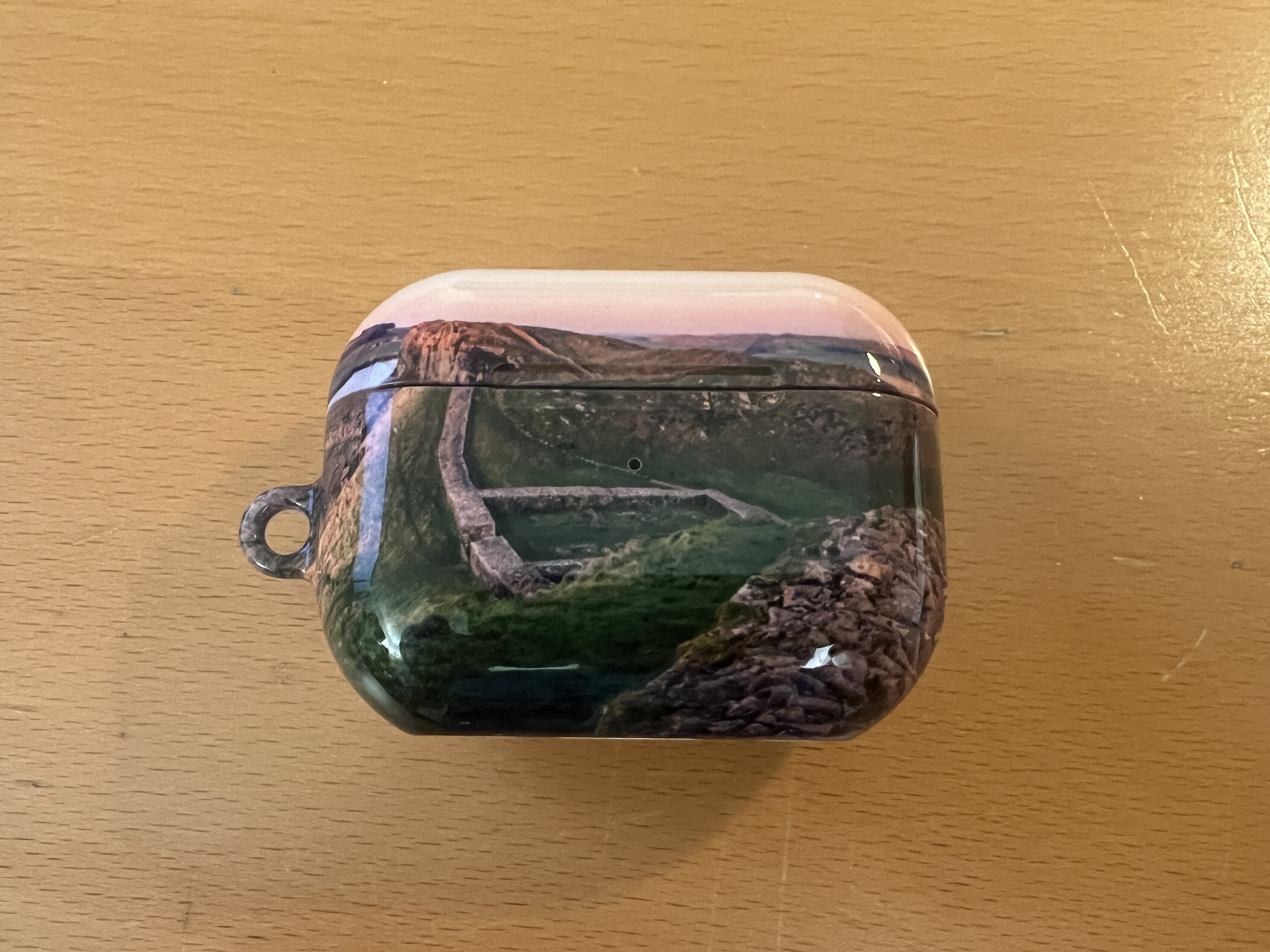
And a final note, I also bought this custom case for my AirPods that has a picture of Hadrian’s Wall on it. I’m listening to British history books on my walks, so every time I pull out the AirPods case, I’m reminded of why I’m putting in all this effort. Must keep sight of the goal at all times!
Enough about me, how about some history about the wall itself?
Sunday Post: Life on the Edge - Daily Existence at Hadrian's Wall
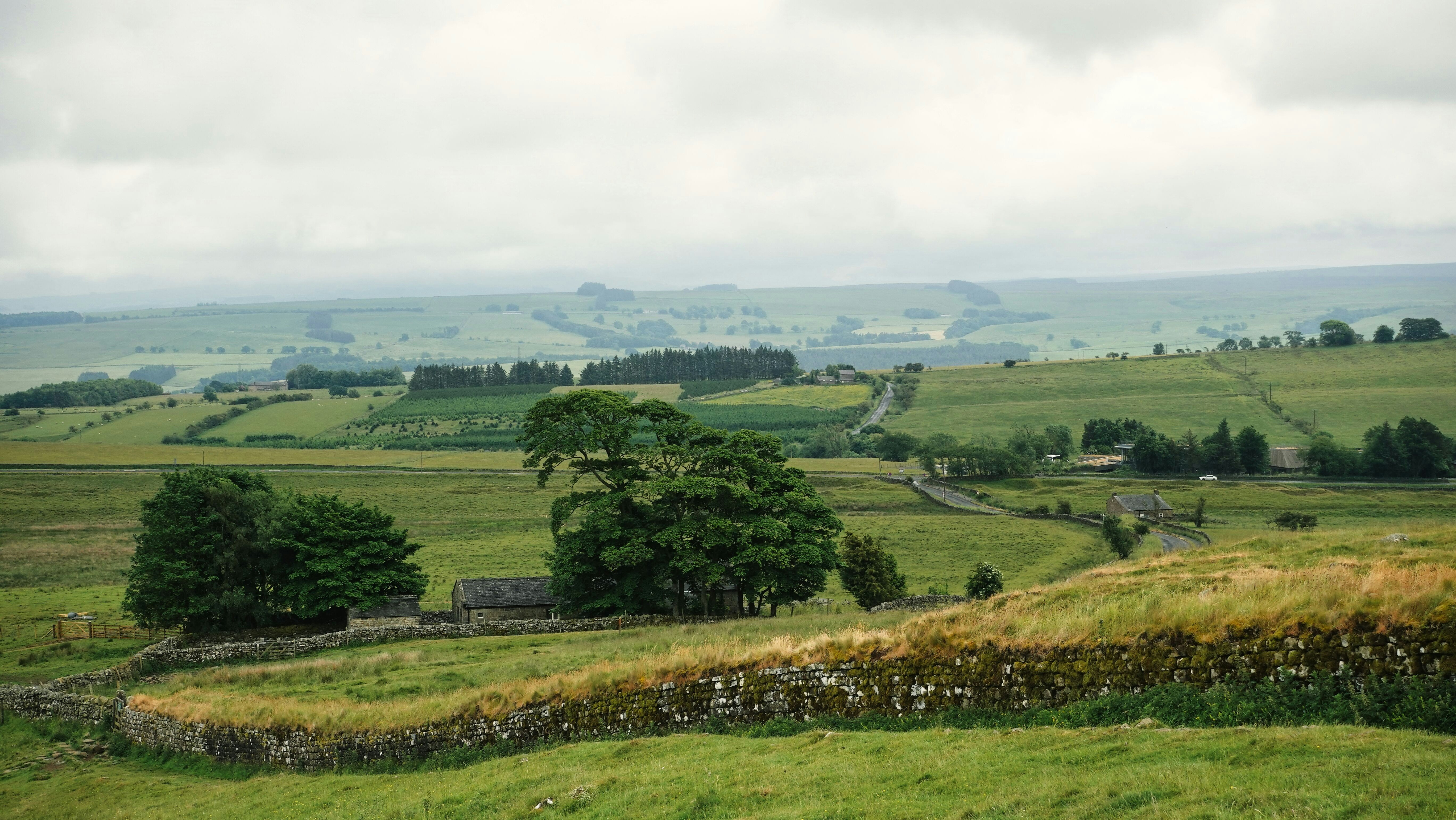
What was life really like for the Roman soldiers who patrolled this remote frontier, and for the diverse communities that flourished in its shadow?
The morning mist clings to the Northumberland crags as it has for nearly two millennia, but the landscape that greets modern visitors to Hadrian's Wall bears little resemblance to the bustling, cosmopolitan frontier that once stretched 73 miles across northern England. Far from the isolated military outpost of popular imagination, archaeological evidence reveals that life along Rome's most famous frontier was surprisingly rich, complex, and surprisingly familiar.
Built starting in 122 AD under Emperor Hadrian's orders, the wall was garrisoned by soldiers housed in large forts, smaller milecastles, and intervening turrets. But these military installations were just one part of a vibrant ecosystem that included traders, craftspeople, families, slaves, and local Britons—all creating communities that would endure for nearly three centuries.
The men who manned Hadrian's Wall were far from the stereotypical image of the grim Roman legionnaire. The wall was staffed mainly by auxiliary (non-Roman citizen) units, drawn from across the empire's furthest reaches. The successive garrisons of Vindolanda consisted primarily of troops from various northwestern Germanic tribes, such as Batavians, Nervians, and Tungrians, all of whom hailed from areas now in the Netherlands and Belgium.
These weren't career soldiers stationed temporarily at a hardship post. Many made Hadrian's Wall their home for decades, creating surprisingly comfortable lives in what might seem an inhospitable environment. The extraordinary Vindolanda tablets—wooden writing tablets found at the Roman fort in northern England that record official military matters as well as personal messages to and from members of the garrison, their families, and their slaves—provide intimate glimpses into their daily routines.
One document describes the fighting habits of the locals, while in another letter, a junior officer complains to his superior that 'My fellow soldiers have no beer – please order some to be sent'. Such concerns—supply shortages, local threats, requests for leave—reveal soldiers grappling with challenges that any modern military personnel would recognize.
The tablets also show us soldiers as complex individuals with rich interior lives. We find shopping lists, letters to families and military colleagues, accounts, military reports, and records of a lively environment of soldiers, families and traders, and slaves. One fragmentary tablet even contains part of a letter on one side and a carefully written line from Virgil's Aeneid on the other—scholars think it's a writing exercise!
You can see many of these tablets in person at the Vindolanda Roman Fort museum.
Perhaps the most surprising discovery about life on Hadrian's Wall is how thoroughly domestic it was. Some of the tablets contain references to soldiers' wives and children, suggesting that Roman forts were not just military bases but also served as homes for soldiers and their families. This contradicts the traditional view of Roman military service as strictly segregated from family life.
The most famous example comes from the so-called birthday invitation, written by a woman called Claudia Severa, the wife of a fort commander named Aelius Brocchus. In the letter Severa invites her friend Sulpicia Lepidina, the wife of Vindolanda's fort commander, Flavius Cerialis, to her birthday party. Severa's personal postscript—"I shall expect you sister. Farewell, sister, my dearest soul, as I hope to prosper, and hail"—represents the earliest example of a woman's handwriting from anywhere in the Roman Empire.
Such correspondence reveals networks of friendship and social obligation that crossed fort boundaries. These were not isolated outposts but connected communities where families celebrated birthdays, shared gossip, and maintained the social bonds that made frontier life bearable.
The archaeological record reveals that the wall attracted far more than soldiers. Many civilians lived in and around the forts on Hadrian's Wall. These included veterans, traders, craftspeople, and the families of soldiers. There was an entire economy of people who lived, died, and traded along the path of Hadrian’s Wall. Far from frontier backwater, it was a beacon of Roman civilization and economic activity.
Life on the wall, while challenging, was far from Spartan. Archaeologists have found more than 5,000 preserved leather shoes from forts along Hadrian's Wall, revealing not just the practical concerns of keeping feet warm and dry in the British climate, but also surprising fashion consciousness. The finds include vast quantities of leather, ranging from army tents and footwear of every description to sling pouches and tool bags, and there are hundreds of textile fragments, wooden objects, and even a hair-net and a wig woven from local moss. These intimate personal possessions paint a picture of people concerned with comfort, appearance, and maintaining civilized standards even at the empire's edge.
The wall's residents enjoyed amenities that would have been luxurious by contemporary British standards. A Roman Bathhouse was discovered in Carlisle, England in 2017, and is the largest known building on Hadrian's Wall. The site has yielded many important discoveries, including 70 intricately carved stones made mostly from cornelian or red jasper. Intaglios were used for Roman signet rings with carvings that depicted gods, goddesses, mythical creatures, and animals.
The wall was not just a military barrier but an active economic zone. In addition to the wall's defensive military role, its gates may have been customs posts. This suggests a thriving trade relationship with people on both sides of the frontier, rather than the hostile standoff often portrayed in popular culture.
Camps of people would accompany each unit, providing the best of local produce and goods from around the empire, so life was rich for soldiers with pay to spend. Archaeological evidence supports this picture of material abundance. The evidence for the extensive mining of iron, lead, and coal reminds us that the local area experienced an industrial revolution when the army took control.
The relationship between Romans and native Britons was complex and nuanced. While there are only scant references to the indigenous Celtic Britons in the written record, when they appear, it's often dismissive. Brittunculi (diminutive of Britto; hence 'little Britons'), found on one of the Vindolanda tablets, is now known to be a derogatory, or patronizing, term used by the Roman garrisons.
Yet the archaeological evidence suggests a more integrated reality. The presence of local religious practices alongside Roman traditions, the evidence of intermarriage, and the long-term stability of frontier communities all point to a pragmatic accommodation between cultures rather than outright hostility.
Life on Hadrian's Wall endured far longer than might be expected. For nearly three centuries, until the end of Roman rule in Britain in 410 AD, Hadrian's Wall was the clearest statement of the might, resourcefulness, and determination of an individual emperor and of his empire. Even after the end of official Roman rule, many of the forts along Hadrian's Wall continued to be occupied through the fifth and into the sixth centuries AD. The fort commanders and their soldiers appear to have taken responsibility for local security.
Bits of the wall went into the construction of local towns, villages, castles, and even stately homes. The legacy of the Roman Wall is, quite literally, everywhere in Northern England, and I can’t wait to see it for myself.
Post a reply