Sunday Post: Preparing for My Hadrian’s Wall Walk End of Summer Update - Why Was the Wall Built?
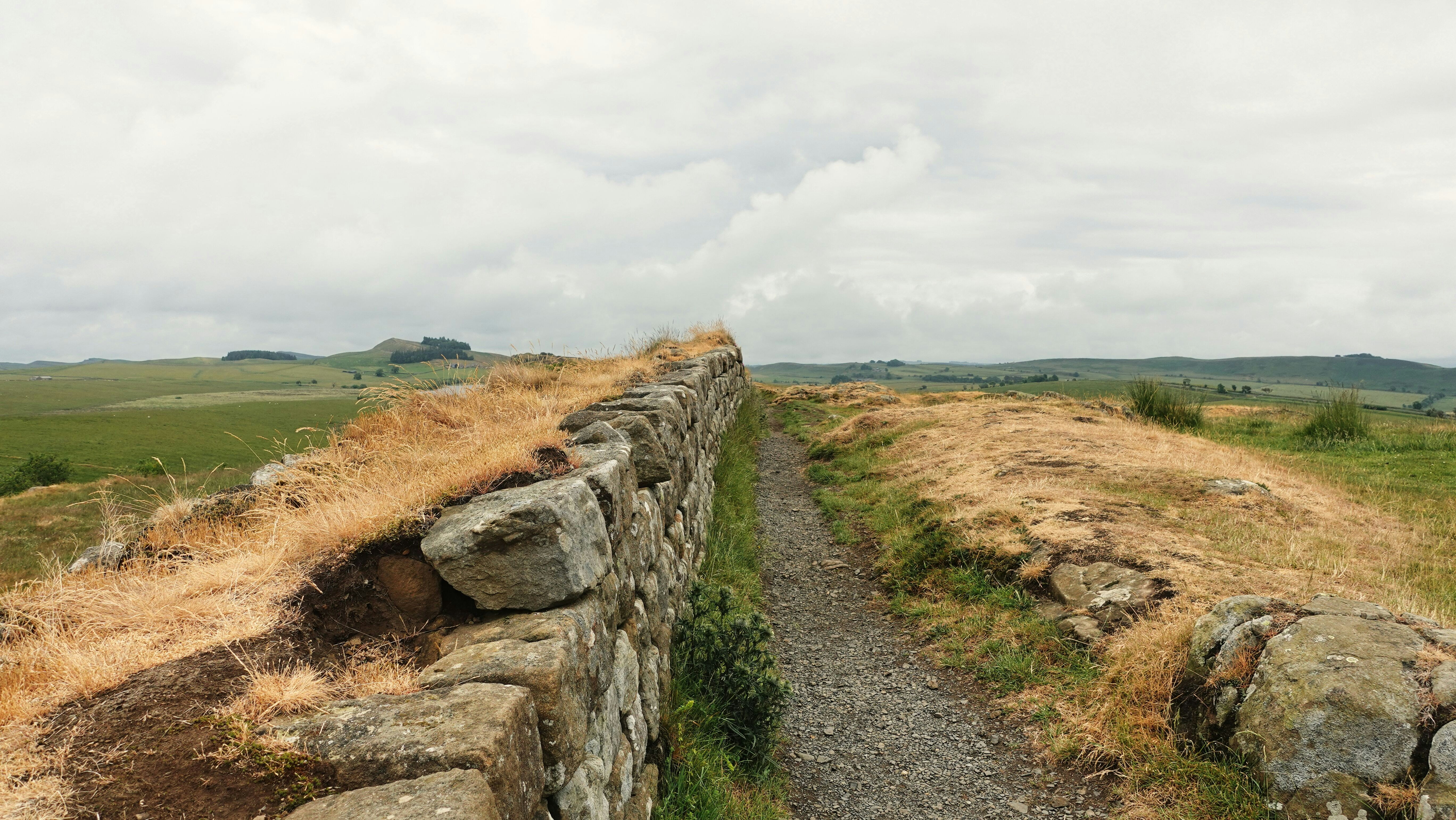
This article is part of an irregular ongoing series where I chronicle my plans to walk Hadrian’s Wall in summer 2026. I plan to use these articles to keep everyone updated on my training, but also my planning and research into the walk and the wall. I plan to write a book about both, so this will sort of act as my ongoing live notes on everything I learn on this journey. Hopefully, at the end of it all, there will be a book!
Member Update
Unfortunately, due to the beginning of the month and a confluence of forces, we dipped below 250 members last week. We're now at 246 members. So, we're going to begin another 'Sprint to 250' to get our numbers back up again. I know we can get there, it's just going to take time. I've been working away on the new video app, and it's coming along. I hope to launch it by the end of the month (and the drop in members isn't going to affect the plans for that, we're moving ahead anyway). Stay tuned!
The bonus podcast proved popular this week, so we may do more 'bonus' episodes outside of our regular cadence. Stay tuned!
Here are some highlights from the chat community this week:
- Best National Trust tea room
- Thursday Murder Club First Trailer Release
- First Look at the ‘New’ Forsyte Saga
- The Choral with Ralph Fiennes
- The Ballad of Wallis Island
- Walking the Cotswold Way - Videos
Training/Planning Update
July was not a great month for training. I walked as much as I physically could. But I was stymied first by mental health, and then the awful heat we’ve experienced here in the midwestern United States this July. I tried to walk when it was really hot, but this proved to be a very bad idea. When it’s 90+ degrees, I just have to stay inside. As I mentioned previously, I hate the treadmill. So while July was a challenging month for daily training, I probably walked half the days this month, mostly short 2.25-mile walks to the end of my street, or walks around the downtown office where I sometimes work locally. Then this past week I was felled by a cold. It’s best not to think of any of this as failure. I was walking with intention much more this month than I have previously. It’s all building toward something. But I know I can do better.
It’s not a great start to this grand adventure. As we get into the cooler autumn months, I should be able to walk more and get on a daily regimen. I have time on my side. I have at least 10 months until I plan to actually do the walk.
One thing I have been doing this summer is keeping an eye on the weather - not here in Indiana, but along the route of the wall. I am aware that I’m planning to do this walk at the height of summer when England is usually at its warmest (the word usually is doing a lot of heavy lifting there). If I can’t handle the heat here in Indiana, what will I do on the wall? Thankfully, it looks like I will not be dealing with anywhere near the kind of heat that I experience here. It should be in the 60s/70s along the route of the wall. It’s cooled by its latitude, but also by being so close to the sea. I should be OK - the bigger concern is rain. But that’s a subject for a future article as I plan more.
I want to thank everyone who wrote in after my initial post earlier this summer, who wrote me encouraging things, or shared their own experiences walking the wall. The advice was very useful. I’ve been in touch with a company called Macs Adventures, which came recommended to us by a follower. I’m interviewing one of their guides tomorrow about the walk, and that will be released on the Anglotopia podcast in September. There’s also the possibility of a direct partnership with them to help with my logistics. I will know more later this autumn.
And finally, planning ahead to 2026. I have to figure out how to pay for this walk. It’s far enough away, there is plenty of time to figure that out, but I also want to get it paid for and booked as soon as possible. Partly because I just like to plan, but also because I want to get it on the calendar as an immovable object. If it’s booked, I have to continue training. I have to continue with the plan. I can’t cancel it once it’s booked. I have to go, I have to do it. There’s serious money on the line. Until it’s actually booked, it’s still an abstraction that can be delayed, moved, or punted to the next year and the next year and the next year. I don’t want this to happen this time.
I want it booked and on the calendar.
So, I have a plan. We are releasing 2026 Calendars very soon as part of our annual fundraiser. I’ve decided to do something a little different with them, since we need the calendars for our yearly fixed business costs. We’re going to release a special 3rd calendar with a limited edition print run, exclusively of pictures of Northern England. The funds from that third calendar will be earmarked solely for Hadrian’s Wall (this will also be in the marketing messaging to people know they can help get me on that wall and follow along). I’m laying out the calendars this week and hope to submit to the printer. I’d like to launch sales by the end of August/Early September. So then, by the end of September, I can book my plane ticket and accomodation. Then it’ll really, actually, be happening.
Stay tuned!
Why Does Hadrian's Wall Exist at All?
I’ve also begun researching the history behind the wall. I have lots of questions. I’m very curious about everything. So I’ll use these explorations to teach myself, and you all about the wall. My first question is, why does the wall exist at all? It seems rather mad to build a 73-mile-long wall in the middle of nowhere in a time when there is only man and horsepower to build it. So, why did the Romans build it, and why did they build it where they did?
Hadrian's Wall stands as one of history's - and Rome’s - most ambitious frontier projects, born from a confluence of military necessity, imperial Roman policy, and geographic opportunity. When Emperor Hadrian visited Britain in AD 122, he inherited a troublesome northern frontier that had resisted Roman control for nearly eight decades.
The wall's existence stems from Hadrian's revolutionary approach to imperial governance. Unlike his predecessor Trajan, who favored aggressive expansion, Hadrian believed that these conquests were untenable. Instead, he wished to establish control over what already existed of the empire and usher in an era of stability and peace. As recorded in the *Historia Augusta*, Hadrian's biographer states that the emperor "was the first to construct a wall, eighty miles in length, which was to separate the barbarians from the Romans".
This frontier represented more than mere military pragmatism. The primary purpose of the wall was as a physical barrier to slow the crossing of raiders, people intent on crossing its line for animals, treasure, or slaves, and then returning with their loot. Yet scholars increasingly recognize that the wall served as "a powerful symbol of Roman military might" and "a propaganda statement as a functional facility". It’s important to note that the wall was not this impregnable fortress keeping out the barbarians, it was more a physical symbol of Roman imperial power - the wall was porous, acting as a place to control economic and people activity. The wall existed in the local environment, and settlements grew up around the wall, north and south of it.
The Romans had struggled with British resistance since their conquest began in AD 43. The revolt of Boudicca of the Iceni in 60/61 CE resulted in the massacre of many Roman citizens and the destruction of major cities (among them, Londinium, modern London), demonstrating the persistent threat these "barbarian" tribes posed to Roman authority. By Hadrian's reign, the Romans had pushed northwards into what is now Scotland and defeated the northern tribes at the battle of Mons Graupius, but maintaining control proved impossible.
Why Was It Built Where It Was?
The wall's location across the Tyne-Solway isthmus was no accident of imperial whim. The Tyne-Solway isthmus determined its general location, and its exact line was carefully selected to meet the needs of its builders. This represented the narrowest point of northern Britain, requiring only 73 miles of construction to span the entire island from coast to coast. Though it says a lot about how Rome thought about the problems it faced that it thought building a 73-mile-long structure was the proper solution to the problems it faced.
By about AD 100, the northernmost army units in Britain lay along the Tyne–Solway isthmus. The forts here were linked by a road, now known as the Stanegate, between Corbridge and Carlisle. The wall was strategically placed slightly north of the existing line of military installations between the River Tyne and the Solway Firth. Its line was carefully chosen to make the best use of the topography (which, ironically, makes it a perfect topography for long-distance walking).
The Romans brilliantly exploited the natural geography. Much of the frontier appears to have been completed during the governorship of Aulus Platorius Nepos, one of Hadrian's most trusted friends, and the builders made good use of local geographical features. The well-known central sector, actually only about 20km long, ran along the crags, but to the east, the Wall was placed on a long ridge running eastwards to Newcastle, while to the west the Wall was often located on shorter ridges, all normally giving wide views to the north.
The choice of this location also reflected practical Roman frontier policy. Unlike other frontiers of the Empire, which were typically defined by natural barriers like seas, rivers such as the Rhine or Danube, or deserts as in North Africa, Northern Britain lacked a clear natural boundary. The Tyne-Solway gap provided the most defensible line where artificial barriers could supplement natural advantages.
This monumental undertaking—requiring six years and three legions totaling 15,000 soldiers to complete—represented Hadrian's definitive answer to Britain's frontier problem. Rather than endless campaigns to subdue unconquerable tribes, the wall created a permanent statement of Roman power while providing practical control over movement between the civilized province of Britannia and the barbarian lands beyond.
As for what life was like in and around the Roman wall, we will save that for future updates!
Post a reply